Lalibela: The “New Jerusalem” of Ethiopia – The Ultimate Travel Guide

High in the mountains of northern Ethiopia lies a city that defies architectural logic and historical convention. Lalibela is not just a city; it is a living, breathing shrine. Officially known as the “New Jerusalem,” this sacred site was built in the 12th century to replicate the holy city of Jerusalem. For Ethiopians, it is the holiest pilgrimage site; for travelers, it is an architectural marvel that ranks as one of the greatest wonders of the world.
The History of the “New Jerusalem”
King Lalibela of the Zagwe Dynasty had a vision. After the fall of Jerusalem to Muslim forces, he sought to create a new holy land for his people. Instead of building upwards, he commanded the construction of 11 monolithic churches carved directly from the red volcanic rock of the mountains. It is said that angels assisted the workers, carving the stones faster than humanly possible. The goal was not just to build churches, but to create an entire sacred landscape that mirrored the biblical Holy Land.
The Bete Giyorgis (Church of St. George)
The most iconic of these structures is the Bete Giyorgis. Shaped like a perfect Greek cross and standing 40 feet deep into the earth, this church is the poster child of Lalibela. Its roof stands at ground level, suggesting a massive cross buried in the earth, waiting to be discovered. From above, it looks like a giant stone cross carved into the ground, and it remains the most photographed church in all of Ethiopia.
The Two Groups of Churches
The churches are divided into two main clusters, separated by the man-made “Jordan River”:
- The Northern Group: Includes Bete Medhane Alem (the largest monolithic church in the world) and Bete Maryam (the oldest and most beautifully decorated).
- The Eastern Group: Features the stunning Bete Gabriel-Rafael, which requires navigating through dark, narrow tunnels to fully explore.
Visiting Lalibela is more than a vacation; it is a spiritual pilgrimage and a journey back in time. Whether you are a historian, a religious devotee, or an adventurer, Lalibela offers an experience unmatched anywhere else on Earth. It stands as a powerful testament to human faith and ingenuity that continues to inspire awe in all who visit.
Why is Lalibela Called Ethiopia’s Jerusalem? A Deep Dive into History
To understand Lalibela, you must understand Ethiopian Orthodox Christianity. The connection to Jerusalem is not merely symbolic; it is geographical and spiritual. The town was designed with specific features to mirror the Holy Land from the naming of the nearby river as the “Jordan” to the replication of the sites of Bethlehem and Golgotha. For millions of Ethiopian Christians, this city is the beating heart of their faith.
The Jerusalem Connection
When Sultan Saladin conquered Jerusalem in 1187, communication between Ethiopia and the Holy Land was severed. Ethiopian pilgrims could no longer safely travel to the sacred sites. King Lalibela reportedly traveled to Jerusalem himself and returned with a divine determination to create an “Ethiopian Jerusalem.” He meticulously designed the layout so that local pilgrims could experience the spiritual journey of the Holy Land without ever leaving the highlands of Ethiopia.
The Legend of the Angels
According to local tradition, King Lalibela was poisoned by his jealous half-brother and fell into a coma for three days. During this time, he was taken up to heaven and shown a vision of the Heavenly Jerusalem. Upon waking, he instructed the masons to work day and night. It is widely believed that angels descended to Earth to aid the workers, working at double speed during the night so that the churches were completed in just 24 years a feat that would have otherwise taken centuries.
The Timkat Festival
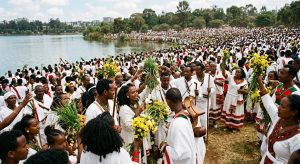
One of the best times to witness the city’s spiritual power is during Timkat (Ethiopian Epiphany). The churches are filled with hundreds of white-robed pilgrims chanting ancient hymns. The faithful process from the Church of Bete Medhane Alem to the nearby river to celebrate the baptism of Jesus, replicating the very rituals performed along the actual Jordan River in the Middle East.
Lalibela is the heart of Ethiopian identity. It stands as a testament to the faith of a nation that maintained its Christian roots while surrounded by Islamic empires. More than just a tourist destination, it is a living, active center of devotion that continues to fulfill its purpose as the spiritual Jerusalem of Africa.
Lalibela Travel Guide 2025: Best Time, Tickets, and Safety Tips
So, you have decided to visit the New Jerusalem. It is a journey that requires some serious planning due to its remote location. Lalibela sits at an altitude of 2,600 meters (8,500 feet) above sea level, which means the climate and logistics are significantly different from the rest of Ethiopia. However, with the right preparation, this trip is entirely achievable and deeply rewarding.
How to Get There
- By Air: Ethiopian Airlines operates multiple daily flights from Addis Ababa to Lalibela Airport. This is the quickest and most convenient method, offering stunning aerial views of the highlands.
- By Road: The drive is long and arduous (approximately 10 hours from Gondar), but it offers spectacular views of the dramatic Ethiopian countryside.
- Pro Tip: Book your flights well in advance, as prices tend to surge dramatically during major religious festivals like Timkat and Christmas.
Best Time to Visit
- Dry Season (October to March): This is undeniably the best time to visit. The skies are crystal clear, and the weather is pleasantly warm during the day (though nights can drop below freezing).
- Rainy Season (June to September): Heavy rains can make the muddy roads slippery and the steep steps of the churches dangerous to navigate.
- Festival Season: January is particularly special due to the Timkat Festival, offering a once-in-a-lifetime cultural experience.
Practical Tips for Travelers
- Altitude Sickness: The city is extremely high up. Take it slow on the first day, drink plenty of water, and avoid alcohol to prevent headaches and fatigue.
- Guides: Hiring a local, certified guide is highly recommended (and often required) for exploring the complex tunnel systems.
- Dress Code: Lalibela is an active place of worship. Shoulders and knees must be covered to show respect inside the churches.
Lalibela is accessible to any determined traveler. With proper planning regarding the weather and logistics, it is a safe, rewarding, and truly unforgettable experience that belongs at the top of every adventurer’s bucket list.
Mystery of the Rock-Hewn Churches: How Was Lalibela Built?
Standing before Bete Medhane Alem is a humbling experience. It is not a building; it is the earth itself that has been hollowed out to create a cathedral. The question that baffles historians and engineers alike is: How did they do it with 12th-century tools? The construction methods used in Lalibela remain one of the greatest unsolved mysteries in architectural history.
Top-Down Construction
Unlike traditional construction which builds from the ground up, Lalibela’s churches were built from the top down. The architects started at the top of the rock and carved downwards into the earth. This meant they had to have a perfect blueprint in their minds from the start, because one single mistake in the carving process would ruin the entire structure permanently.
The Water Management System
One of the most overlooked aspects of the construction is the water management. The site required a complex system of trenches to drain rainwater away from the churches. A massive labyrinth of tunnels and conduits was carved into the surrounding rock to ensure the churches did not flood during the heavy rainy seasons, showcasing incredible hydraulic engineering knowledge.
The “Angels” Theory
While historians generally agree that tens of thousands of workers were involved over 24 years, locals still firmly believe in the miracle of angels. The sheer precision of the carvings, the perfect symmetry, and the interlinked tunnels are considered too perfect for human hands alone. There is also a local legend that the workers “drank milk” instead of water to keep their energy up, and were still able to complete the monumental task despite the massive physical strain.
Whether a product of human genius or divine intervention, the churches of Lalibela remain one of the greatest architectural achievements in human history. They stand as a silent, stone testament to the power of faith and the brilliance of ancient Ethiopian civilization.
About The Author