Top 5 Historical Places in Ethiopia: A Journey Through Time
Ethiopia is a country that rewards travelers who look beyond the usual safari circuit. It holds its own calendar, its own script, and a Christian history that reaches back to the fourth century. For anyone interested in the past, it offers something rare: a historical place that is not a museum piece, but a living part of daily life.
The country has twelve UNESCO World Heritage Sites, more than most nations in Africa . That list spans medieval churches, ancient obelisks, royal castles, and walled Islamic cities. This guide focuses on five of the most significant and accessible sites for first-time visitors. Each one tells a different part of Ethiopia’s long story.
Lalibela: The Churches Carved From Rock
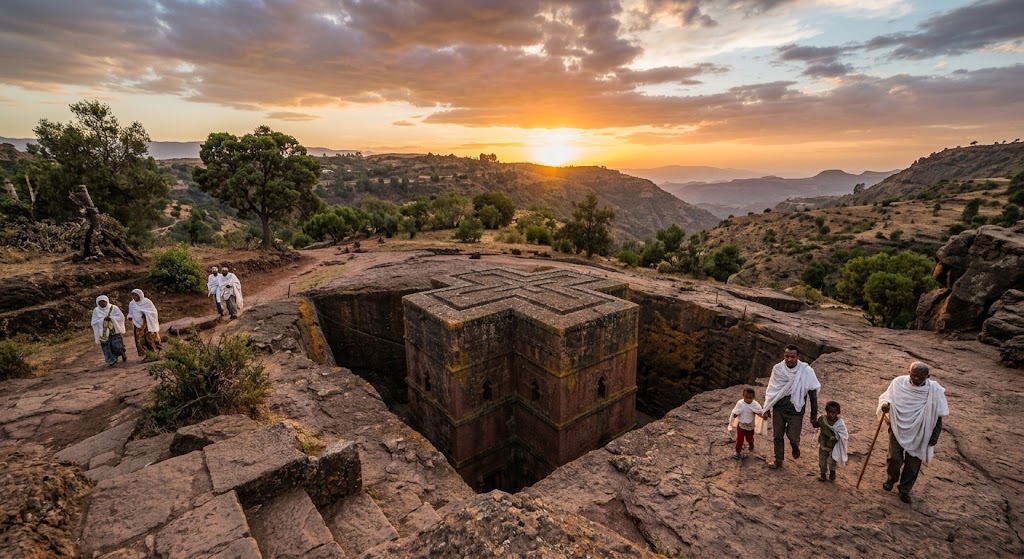
The rock-hewn churches of Lalibela are the single most famous historical site in Ethiopia. They were carved downward from solid volcanic rock, not built up from stacked stones. Roofs, walls, columns, and interiors were all shaped by removing the surrounding stone.
There are eleven churches in three main groups. The most iconic is Bete Giyorgis, shaped like a Greek cross and surrounded by a deep pit. Visitors approach it from below, through a trench. The scale is difficult to capture in photographs.
The building of the churches is still debated by scholars. Traditional accounts attribute them to King Lalibela of the Zagwe dynasty, who ruled in the late twelfth and early thirteenth centuries. The Gedle Lalibela, or Acts of Lalibela, says the king built them after seeing a vision of heaven. Archaeological research suggests the complex developed over several stages, possibly from the eighth to the early thirteenth century.
What strikes many visitors is that Lalibela is not a ruin. It remains an active pilgrimage site for the Ethiopian Orthodox Church. Major festivals like Genna (Ethiopian Christmas) in January and Timkat (Epiphany) draw thousands of white-shawled worshippers. The churches fill with chanting and candlelight.
Practical notes: Lalibela sits at about 2,500 meters, so take the first day slowly. The paths between churches are uneven and often steep. Wear sturdy shoes. Entrance for foreign visitors requires a ticket, and prices change, so verify the current fee with a licensed local guide before you go.
Aksum: Obelisks of an Ancient Empire
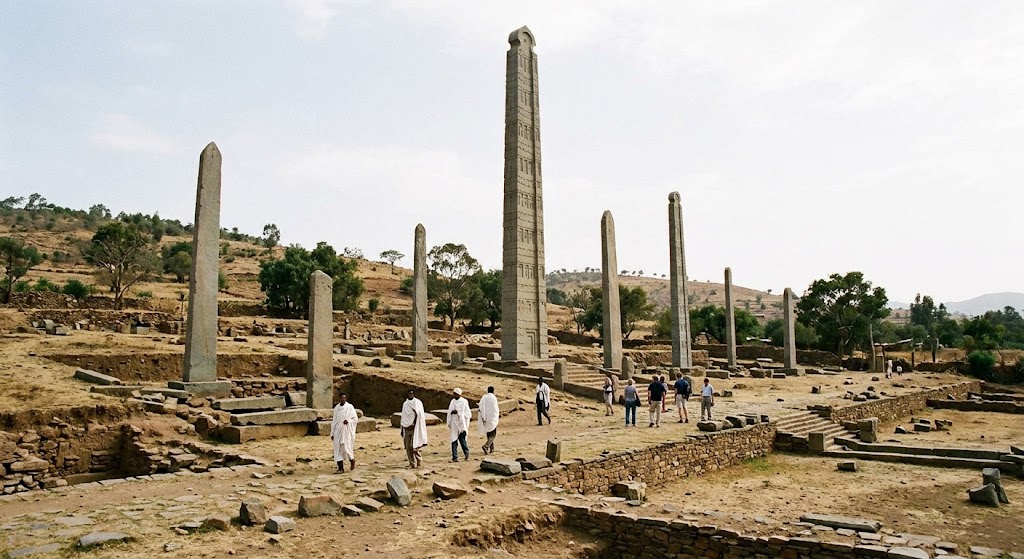
Aksum (also spelled Axum) was the heart of the Kingdom of Aksum, one of the great powers of the ancient world. At its height around 100 CE, the empire traded with India, China, and the Roman Empire. The city is known for its stelae: tall granite obelisks carved from single blocks of stone.
The largest standing stela, Stela 3, is about 21 meters tall. It is decorated with carvings that show a nine-story building, complete with false doors, windows, and horizontal bands representing wooden beams. These designs give historians a picture of Aksumite architecture from the fourth century.
Aksum is also the spiritual center of the Ethiopian Orthodox Church. Tradition holds that the Ark of the Covenant is kept in the Chapel of the Tablet near the Church of St. Mary of Zion. The chapel is not open to visitors, but the claim itself shows how deeply Aksum is tied to Ethiopian religious identity.
One piece of modern history adds to Aksum’s story. The Obelisk of Axum was taken to Rome in 1937 during the Italian occupation. It was returned to Ethiopia in 2005 and re-erected.
Practical notes: Aksum is in the Tigray region. Check current travel advisories before planning, as conditions can change. The main stelae field is walkable, but the site is spread out. A local guide helps explain the carvings and tombs.
Gondar: Castles of the Ethiopian Empire
Gondar became the permanent capital of the Ethiopian Empire in 1636 under Emperor Fasilides. Before that, Ethiopian rulers moved their royal camps frequently. Fasilides settled in Gondar and began building.
The result is Fasil Ghebbi, a royal enclosure surrounded by a 900-meter wall. Inside are castles, palaces, a library, a chancellery, and a banqueting hall. The architecture is unusual for Africa: the main castle has huge towers and battlemented walls, resembling a piece of medieval Europe.
The style reflects outside influences. Jesuit missionaries brought Baroque elements to Gondar. Indian and Arab influences are also visible. Later emperors continued building, and the royal court developed into a fortified compound with about twenty palaces and royal buildings.
Gondar is also home to Debre Berhan Selassie, a church famous for its ceiling covered in painted angel faces. The site is part of the UNESCO World Heritage listing for Fasil Ghebbi.
Practical notes: Gondar has an airport with domestic flights from Addis Ababa. The royal enclosure is the main site, but the Fasilides Bath and Debre Berhan Selassie are worth the short drive. A combined ticket may cover several sites; check current prices locally.
Harar Jugol: The Walled Islamic City
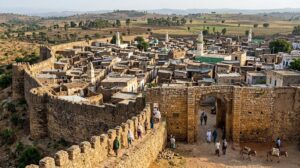
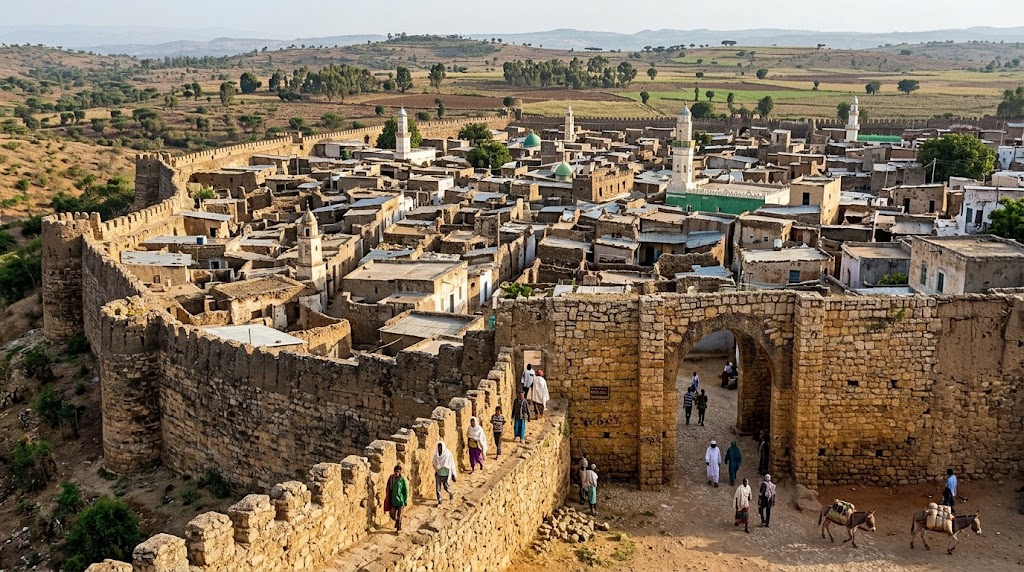
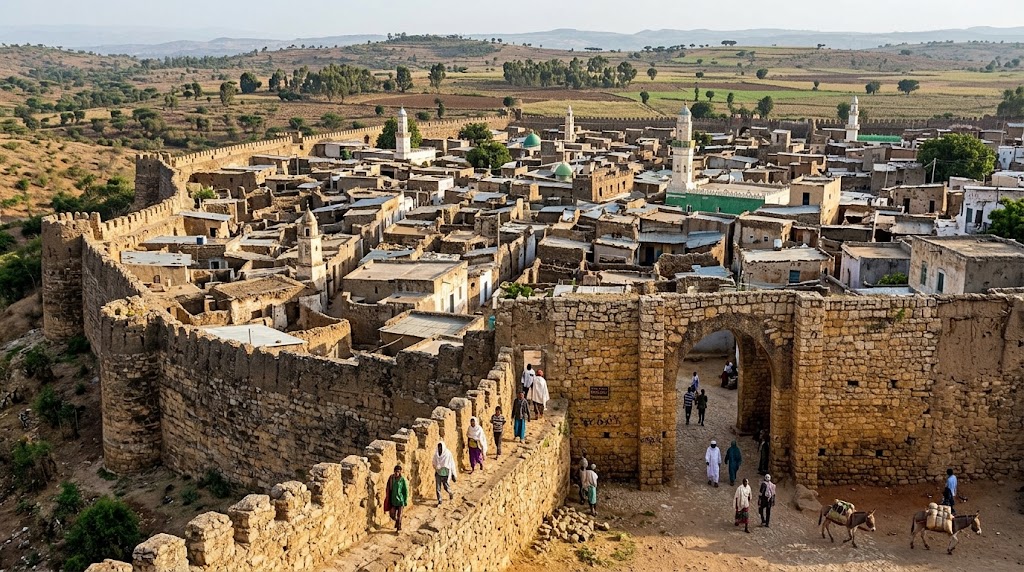
Harar Jugol is a walled city in eastern Ethiopia, considered the fourth holiest city in Islam . Its name, Jugol, refers to both the defensive wall and the fortified town itself.
The city has a distinct character. It sits within a largely Christian region but developed as an Islamic center, founded according to tradition by missionaries from the Arabian Peninsula. The historic town has 82 mosques and 102 shrines, some dating back centuries. The oldest mosques date from the tenth century.
Harar is known for its narrow alleys, colorful doors, and traditional Harari houses. The ge gar is a typical townhouse with three rooms on the ground floor and service areas in a courtyard. Indian merchants who came after 1887 built a different style, with two-story rectangular houses and verandas.
The city is also famous for its hyena men, who feed wild hyenas by hand outside the walls at night. This practice is controversial among animal welfare groups. Visitors should research it carefully before deciding whether to watch.
Practical notes: Harar has a domestic airport. The walled city is best explored on foot, but the alleys are narrow and easy to get turned around in. A local guide is helpful for finding the main gates and mosques. Dress modestly, as this is a conservative Islamic city.
Tiya: The Enigmatic Stelae Field
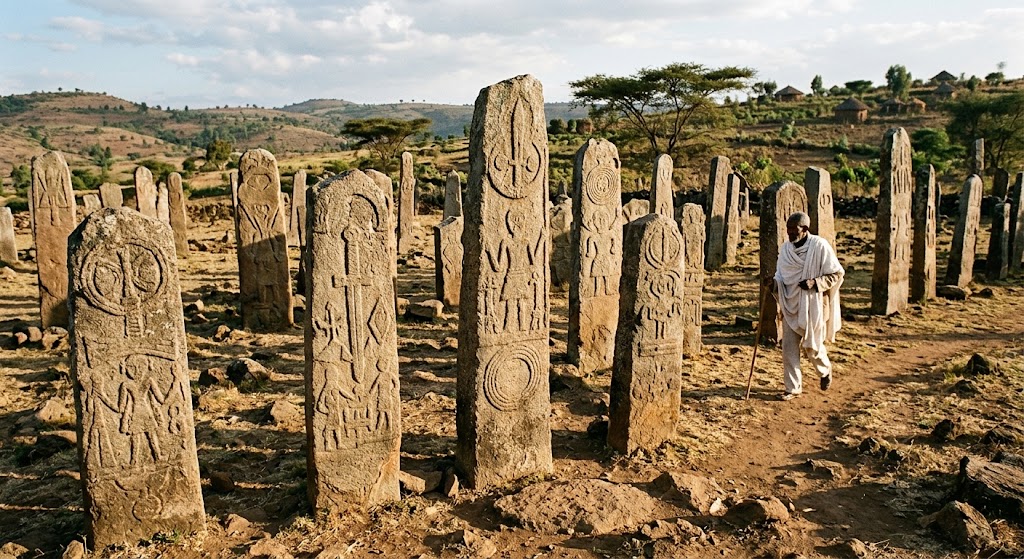
Tiya is less famous than the other sites on this list, but it offers something unusual. It is a prehistoric cemetery with 36 carved stelae, erected between the tenth and fifteenth centuries. The site is the largest and most representative collection of its kind in Ethiopia.
What makes Tiya stand out is the carvings. Thirty-two of the stelae are decorated with symbols that scholars have not fully decoded. Swords appear on many of them, along with other enigmatic signs. Archaeological digs have found graves around the stelae, suggesting a funerary purpose.
The tradition of erecting megalithic monuments in Ethiopia is ancient, with some examples dating from before the common era. Tiya represents a later chapter of that tradition. The site was inscribed as a UNESCO World Heritage Site in 1980.
Practical notes: Tiya is south of Addis Ababa, roughly a two-hour drive in good conditions. It is a smaller site, best combined with other stops in the Soddo region. There is an exhibition hall with information about the stelae, though facilities are basic. Check locally for current access and any entrance fees.
Why These Five Sites Matter
Ethiopia’s historical places are not isolated monuments. They connect to a story that stretches from the ancient Aksumite Empire through the medieval Zagwe dynasty to the Gondarine period and the Islamic cities of the east. Visiting them in sequence is like reading chapters of a book.
Each site also reflects something distinct about Ethiopian culture. Lalibela shows the depth of Orthodox Christian devotion. Aksum shows the reach of an ancient trading power. Gondar shows a period of royal ambition and outside influence. Harar shows the country’s Islamic heritage. Tiya shows that people were building and marking their dead in this land long before written records.
Quick Tips
- Check travel advisories first. The U.S. State Department advises reconsidering travel to Ethiopia due to sporadic conflict and civil unrest, with specific regions marked “Do not travel”. Conditions change, so check your government’s latest guidance.
- Book domestic flights early. Ethiopian Airlines connects Addis Ababa to Lalibela, Gondar, Aksum, and other regional towns. Flying saves days of overland travel.
- Carry cash in birr. Credit cards work at some Addis Ababa hotels but rarely elsewhere. You will need cash for tickets, guides, and tips.
- Hire licensed local guides. At sites like Lalibela and Aksum, a guide explains carvings, history, and religious customs you would otherwise miss.
- Dress respectfully at religious sites. Cover shoulders and knees. Remove shoes before entering churches. Ask before photographing people or religious ceremonies.
Frequently Asked Questions
What is the oldest historical place in Ethiopia?
Aksum is generally considered the oldest major historical site, with its kingdom dating back to the first century CE. However, archaeological sites like Melka Kunture and the Lower Valley of the Awash are far older, containing evidence of early human ancestors .
Can I visit Lalibela and Gondar in one trip?
Yes. Ethiopian Airlines operates domestic flights between Addis Ababa, Lalibela, and Gondar. A common route is Addis Ababa to Lalibela, then Gondar, then back to Addis. Allow at least two days at each site to avoid rushing.
Is it safe to visit Ethiopia’s historical sites?
Conditions vary by region. Some areas are currently under “Do not travel” advisories from the U.S. State Department, while others are considered safer. Check your government’s latest advisory, consult a reputable tour operator, and avoid border regions and areas with active conflict.
Other Posts From EthioBrief
- Lalibela Travel Guide — Detailed guide to the churches, tickets, and festival timing.
- Ethiopian Orthodox Festivals — Genna, Timkat, and how to attend respectfully.
- Ethiopia Domestic Flights Guide — Routes, booking tips, and airport information.
- Aksum Stelae: What the Carvings Mean — A deeper look at Aksumite architecture and symbolism.
- Ethiopia Travel Safety and Health — Altitude, water, and current advisories.
About The Author