Ethiopian Football: The League, the Clubs, the Talent
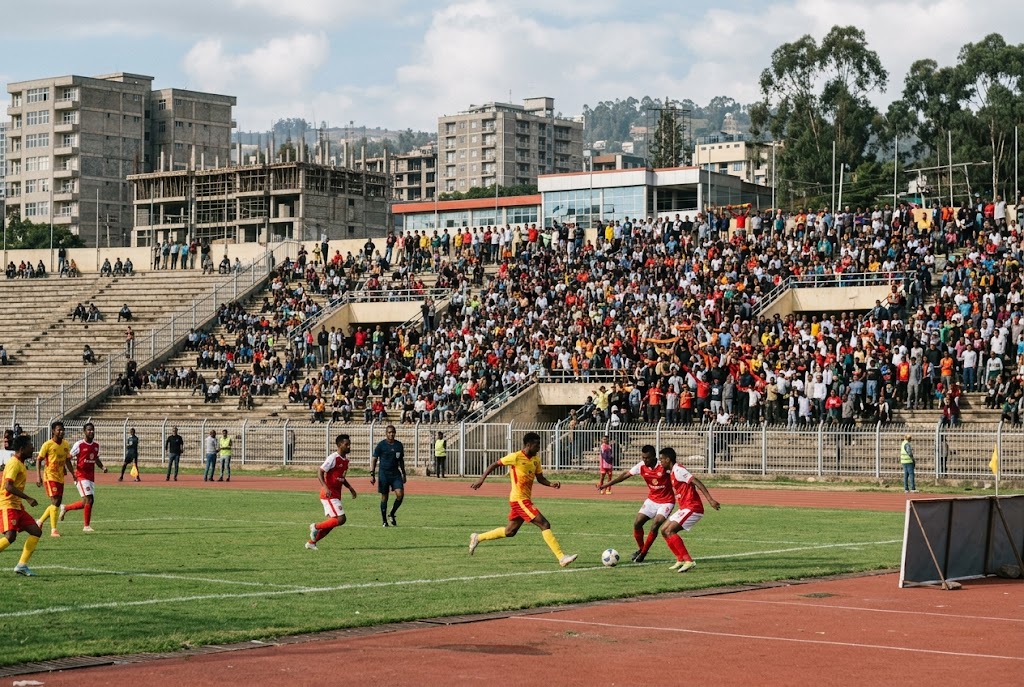
Ethiopian football carries a weight of history that few African nations can match. The country was a founding member of the Confederation of African Football in 1957. It hosted and won the Africa Cup of Nations in 1962. For a brief period in the 1960s, the Walia Antelopes were among the most feared teams on the continent.
Then came decades of struggle. Political instability, conflict, and neglect pushed Ethiopian football to the margins. The national team failed to qualify for the Africa Cup of Nations between 1982 and 2013. A whole generation grew up without seeing their country compete at the highest level.
That is changing. The Ethiopian Football landscape today is a mix of old giants, new investment, and a determined push toward youth development. The league has expanded, clubs are spending on young players, and the national team has returned to continental competition. This guide covers the league, the clubs, and the talent shaping the future.
The Ethiopian Premier League: Structure and Scale
The Ethiopian Premier League (EPL) is the top tier of professional football in Ethiopia. It is organized by the Ethiopian Premier League Share Company (EPLSC) and sanctioned by the Ethiopian Football Federation.
The league has undergone significant changes in recent years. For the 2025/26 season, 20 clubs are participating, with 530 registered players. The average player age is 25, and about 8.3% of players are foreign nationals.
The league operates with a unique structure. Clubs are divided into two groups of 10, with groups rearranged three times during the season to ensure each team plays the others. Matches are scheduled across five days per matchweek, with a minimum of 72 hours rest between games for each club.
The total market value of the league is modest by international standards, around €38 million. The average player market value is approximately €59,000. This reflects the league’s developing status, but it also means opportunities for young players to emerge and be noticed.
Saint George: The Record Champions
No club dominates Ethiopian football like Saint George SC (Kidus Giorgis). The Addis Ababa-based club has won the league title 31 times, more than any other team.
Saint George’s dominance has come in waves. The club won multiple titles in the 1960s and 1970s, then again in the 1980s and 1990s. In the 2000s and 2010s, Saint George became the undisputed power in Ethiopian football, winning the league in 2005, 2006, 2008, 2009, 2010, 2012, and 2014 among other years.
The club is based at Addis Ababa Stadium and has a large, passionate fan base. Its success has made it the benchmark against which other Ethiopian clubs are measured.
Other Historic Clubs
Ethiopian football has several other clubs with rich histories.
Mechal SC (Defence Force) has won multiple league titles, particularly in the 1940s, 1950s, and 1980s. The club was a dominant force in the early decades of Ethiopian football.
Ethiopia Bunna SC (Ethiopian Coffee) is another historic club with several league championships. The club has been a consistent presence in the top flight and won the league in 1997, 2004, 2007, and 2011.
EEPCO FC (Ethiopian Electric) had a strong period in the 1980s and 1990s, winning multiple titles. The club’s name changed over the years, but its history remains part of the Ethiopian football story.
Cotton Factory Club was a dominant force in the 1950s and 1960s, winning several league titles during that era.
The New Champion: Sidama Bunna
The 2025/26 season brought a new name to the top of Ethiopian football. Sidama Bunna FC (also known as Sidama Coffee) won the league title for the first time in the club’s history.
Sidama Bunna is based in Hawassa, in the Sidama region. The club’s victory broke the long-standing dominance of the Addis Ababa-based giants and signaled that the league is becoming more competitive. The club has one of the highest average market values in the league, at around €71,000 per player.
The rise of Sidama Bunna reflects a broader trend. Clubs from outside the capital are investing more in their squads and challenging the traditional power structure.
The Walia Antelopes: A National Team with History
The Ethiopian national team is known as the Walia Antelopes (or Walias). The name comes from the Walia ibex, a wild goat found only in the Ethiopian highlands.
Ethiopia’s football history is intertwined with the birth of African football itself. The country was one of three teams (along with Egypt and Sudan) to participate in the inaugural Africa Cup of Nations in 1957. Ethiopia finished as runners-up that year.
The crowning achievement came in 1962. Ethiopia hosted the tournament and defeated Egypt 4-2 in the final to win the Africa Cup of Nations. It remains the country’s only continental title.
Ethiopia also reached the semi-finals in 1968 and finished fourth in 1970. But the decades that followed were lean. The national team failed to qualify for the AFCON between 1982 and 2013.
The return in 2013 was celebrated across the country. Ethiopia qualified dramatically, overturning a deficit against Sudan to advance on away goals. The qualification was seen as the beginning of a new era.
The Talent: Players to Know
Ethiopian football has produced several notable players. Some have made their mark domestically, while others have played abroad.
Getaneh Kebede is Ethiopia’s all-time leading goalscorer, with 29 goals in 51 appearances for the national team. He has been a consistent performer for the Walias and is widely regarded as one of the country’s best forwards.
Saladin Said was the star of the 2013 AFCON qualification campaign. He scored crucial goals during the run and played for Wadi Degla in Egypt. His 12 international goals in just 20 matches underline his quality.
Abubeker Nassir is a more recent talent, with 8 goals in 22 appearances for the national team. He represents the new generation of Ethiopian players looking to make an impact.
Shimelis Bekele has been a long-serving midfielder for the national team, with 62 appearances and 9 goals. His experience and leadership have been valuable.
Youth Development: A New Approach
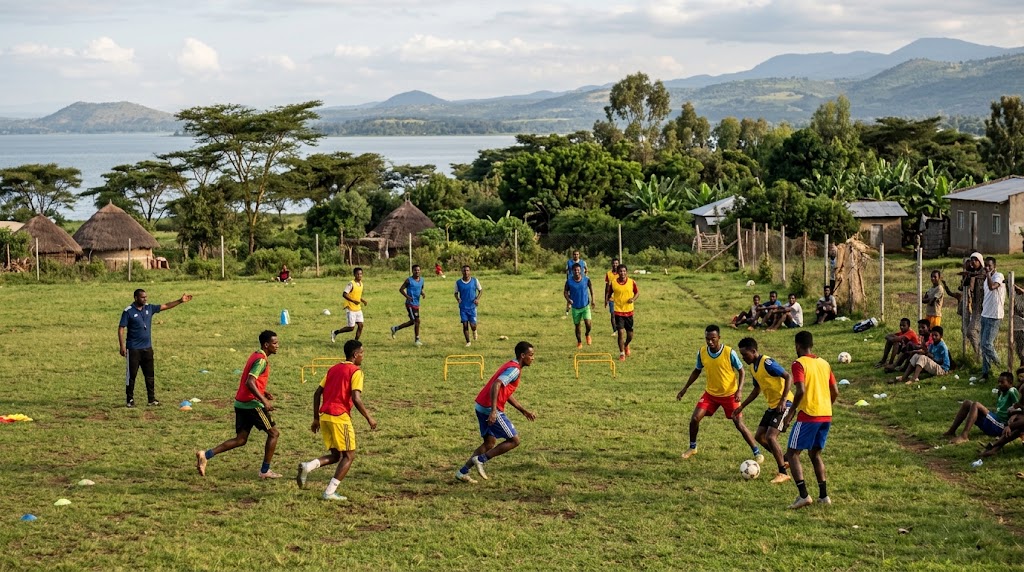
The most significant development in Ethiopian football may be the renewed focus on youth. For decades, the country lacked a systematic approach to identifying and developing young talent. That is changing.
The “One Ball for One Trainee” project, launched five years ago by the Ethiopian Football Federation, has started to produce results. The initiative has helped Ethiopia return to the U-17 Africa Cup of Nations for the first time in 22 years.
The federation plans to expand this into a youth league across 21 cities. The annual budget for the league is estimated at around $643,000.
The impact is already visible. In a landmark move, newly promoted Premier League side Sheger Ketema paid 1 million Ethiopian Birr (about $6,300 USD) to sign three Ethiopia U-17 stars: captain Biniyam Abraha, striker Dawit Kassaw, and defender Zelalem Kebede.
The players came from Three Point Academy, a youth academy set up by German national Teddy Rupp in partnership with the EFF. The academy has become a model for youth development in Ethiopia.
The EFF hailed the signings as a step forward and called on other clubs to invest in youth players. It was the first time in recent history that an Ethiopian top-flight club paid a significant sum to a youth academy for player development.
Challenges Facing Ethiopian Football
Despite progress, Ethiopian football faces real challenges.
Infrastructure remains a limiting factor. Stadiums are often old and lack modern facilities. Training pitches are limited in number and quality. This affects both player development and the fan experience.
Financial constraints are significant. The average player market value in the league is low, and clubs operate on tight budgets. This makes it difficult to retain top talent, who may seek opportunities abroad.
Competition from other leagues is intense. European football dominates television viewing in Ethiopia. Young players aspire to play in Europe, and domestic clubs struggle to compete for attention and investment.
Political and economic instability has affected Ethiopian football in the past. The decades of underperformance after 1970 were partly a result of broader national challenges.
The Future of Ethiopian Football
The signs of progress are encouraging. The return to the AFCON in 2013 showed what is possible. The youth development initiatives are producing players who can compete at the continental level. The league is expanding and becoming more competitive.
Ethiopia’s footballing history is a source of national pride. The 1962 AFCON victory is still celebrated. The Walia Antelopes carry the hopes of a nation that loves the game.
The challenge now is to build on this momentum. Sustained investment in youth, infrastructure, and the league will be essential. If the current trajectory continues, Ethiopian football could reclaim its place among Africa’s competitive nations.
For travelers, Ethiopian football offers a genuine cultural experience. Attending a match at Addis Ababa Stadium or a regional ground is a way to see the country’s passion for the game firsthand. The atmosphere is energetic, the fans are knowledgeable, and the football is played with skill and heart.
Quick Tips
- Attend a match if you can. The Ethiopian Premier League plays from October to June. Check local listings for fixtures in Addis Ababa and other cities.
- Learn the team names. Saint George, Ethiopia Bunna, and Sidama Bunna are among the most followed clubs. Knowing who is playing adds to the experience.
- Buy tickets at the stadium. Ticketing is often straightforward, and prices are affordable. Arrive early to secure a good spot.
- Respect the rivalry. Matches between Addis Ababa clubs can be intense. Enjoy the atmosphere but stay neutral if you are a visitor.
- Follow the Walia Antelopes. The national team’s fixtures are major events. Qualifiers and friendly matches draw large crowds and passionate support.
Frequently Asked Questions
Which club has won the most Ethiopian Premier League titles?
Saint George SC (Kidus Giorgis) is the record champion with 31 league titles. The Addis Ababa-based club has dominated Ethiopian football for decades and remains the benchmark for success in the country.
Has Ethiopia ever won the Africa Cup of Nations?
Yes. Ethiopia won the 1962 Africa Cup of Nations as hosts, defeating Egypt 4-2 in the final. It remains the country’s only continental title. Ethiopia also finished as runners-up in the inaugural tournament in 1957.
Who is Ethiopia’s all-time leading goalscorer?
Getaneh Kebede is Ethiopia’s all-time leading goalscorer with 29 goals in 51 appearances for the national team. He is followed by Saladin Said (12 goals) and Shimelis Bekele (9 goals).
About The Author