Ethiopian Coffee Ceremony: A Complete Guide
In Ethiopia, coffee is not a quick stop on the way to work. It is a ritual. It is a gathering. It is an invitation to slow down, sit with others, and share a moment that can last anywhere from one hour to three.
The Ethiopian Coffee Ceremony known locally as Buna Tetu (come drink coffee) is one of the most distinctive cultural traditions in Africa. It is performed daily in millions of homes, from the highlands to the capital. It marks celebrations, settles disputes, welcomes guests, and simply provides a reason for neighbors to connect.
This guide explains what the ceremony is, how it unfolds, what each element means, and how visitors can experience it with respect.
What the Coffee Ceremony Means in Ethiopian Culture
Coffee was discovered in Ethiopia. The legend points to a goatherd named Kaldi who noticed his flock became energetic after eating red coffee berries . But the ceremony itself goes beyond the drink. It is a structured social ritual that expresses hospitality, friendship, respect, and community.
In Ethiopia, offering coffee is a gesture of welcome. Being invited into someone’s home for a coffee ceremony is a sign that you are trusted and valued. The ceremony is traditionally performed by women, who roast, grind, and brew the coffee while guests watch and converse.
In rural areas, the ceremony happens up to three times a day after breakfast, after lunch, and after dinner. In cities, it is more common on holidays and special occasions, though many households still perform it daily.
The Tools of the Ceremony
The ceremony uses several traditional items, each with its own name and purpose.
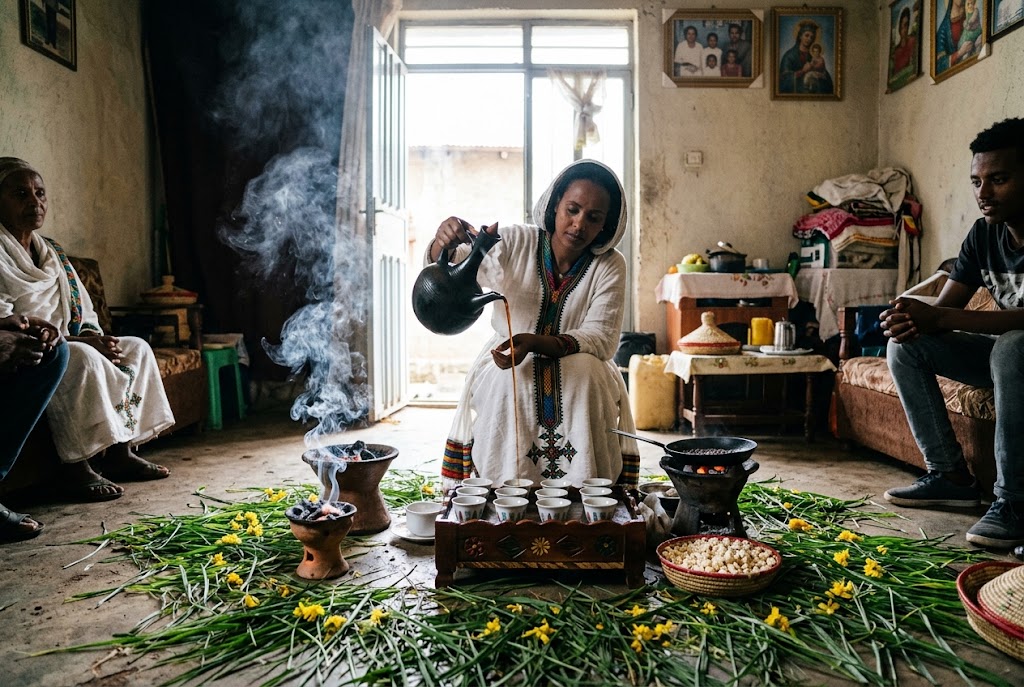
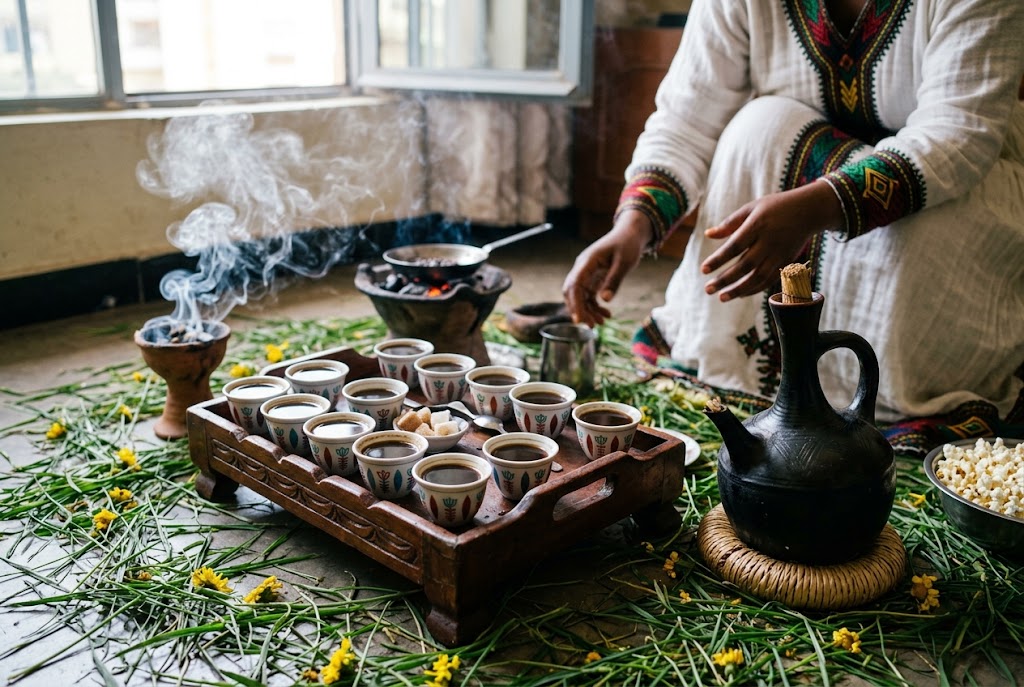
Jebena A round-bottomed clay coffee pot with a long neck and spout. The clay is said to add a distinctive earthiness to the coffee. Water is boiled in the jebena, and coffee is brewed directly inside it.
Mukecha and Zenezena A wooden mortar and pestle used to grind the roasted beans by hand.
Menkeshkesh or Baret Metad A shallow pan or roasting plate used to roast the green coffee beans over an open fire.
Sini Small, handleless porcelain cups, holding roughly 75 ml each. They are arranged on a tray.
Rekobot A low wooden table that holds the coffee pot, cups, and often an attached incense burner.
Girgira An incense burner. Frankincense or myrrh is burned throughout the ceremony to purify the space and create a welcoming atmosphere.
Goosgwaze Fresh green grass or flowers scattered on the floor around the ceremonial area, marking it as a sacred or special space.
Step-by-Step: How the Ceremony Unfolds
The ceremony follows a rhythm that has been repeated for generations. Here is how it typically unfolds.
Preparation
The host spreads fresh green grass on the floor and lights incense. The scent of frankincense or myrrh fills the room, signaling that the ritual is about to begin.
Guests are seated around the low table. Snacks are passed around often kolo (roasted barley), popcorn, or roasted peanuts.
Roasting the Beans
Green coffee beans are washed and placed in the roasting pan. The host holds the pan over hot coals or a small stove. The beans crackle and darken. Smoke rises, carrying the aroma through the room.
The host then carries the smoking pan around the room. Guests are invited to waft the smoke toward their noses with their hands, inhaling deeply. This is considered an essential part of the experience the aroma is as important as the taste.
Grinding
Once roasted, the beans are placed in the wooden mortar and ground with the pestle. The grinding is done by hand, and the sound of the pestle against the mortar becomes part of the ceremony’s rhythm.
Brewing
The ground coffee is added to water boiling in the jebena. The pot is placed back on the fire and brought to a boil. In the Ethiopian highlands, water boils at a slightly lower temperature, which is ideal for preserving the coffee’s aromas.
Pouring and Serving
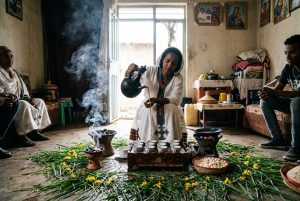
When the coffee is ready, the host holds the jebena high above the cups and pours in a continuous stream. The high pour aerates the coffee and traps the grounds at the bottom of the pot. Mastering this pour takes skill and practice.
The coffee is served black, without milk. Sugar may be added. In some rural areas, a pinch of salt is used instead. A sprig of tenadam (rue) may be dipped into the cup for its aromatic and medicinal qualities.
The Three Rounds: Abol, Tona, and Bereka
The ceremony is served in three rounds. Each round has its own name and meaning.
Abol (First Round): The strongest and most concentrated cup. This round is served first, starting with the oldest and most respected guest. It is considered the most important.
Tona (Second Round): Water is added to the same grounds and the coffee is brewed again. This round is lighter than the first. It continues the conversation and the gathering .
Bereka (Third Round): Meaning “blessing,” this is the final round. It is the weakest in strength but is said to carry a spiritual blessing. In Ethiopian tradition, drinking all three rounds is customary. It is acceptable to drink one or three cups, but not two.
The third round is often described as the sweetest not because of sugar, but because it closes the gathering with a sense of completeness and goodwill.
Coffee Snacks: Kolo, Popcorn, and More
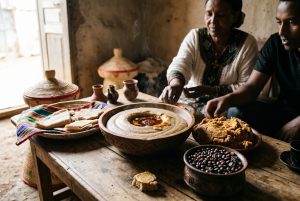
Coffee in Ethiopia is rarely served alone. Traditional snacks accompany the ceremony, turning it into a drawn-out experience that encourages conversation.
Kolo: Roasted barley mixed with peanuts or other seeds. This is the most common snack.
Popcorn: Lightly salted or plain popcorn is widely served, especially in urban settings.
Himbasha: A sweet, spiced bread sometimes served during celebrations.
Dabo: A simple bread, often homemade, served with coffee during holidays.
The snacks are not an afterthought. They balance the bitterness of the coffee and extend the social time, making the ceremony a meal-like experience rather than a quick drink.
Etiquette for Visitors
If you are invited to an Ethiopian coffee ceremony, here is how to participate respectfully.
Accept the invitation. Turning down an invitation to coffee can be seen as a rejection of hospitality. If you must decline, do so politely.
Wait to be served first. The oldest or most honored guest is served first. Do not reach for a cup before others are served .
Drink all three rounds if you can. It is customary. If you cannot manage three, drinking one is acceptable. Drinking two is considered unusual.
Inhale the aroma. When the roasting pan is brought to you, waft the smoke toward your nose. This shows appreciation for the coffee and the effort of the host.
Engage in conversation. The ceremony is social. Ask questions, share stories, and enjoy the slow pace. Silence is fine too, but the point is togetherness.
Use your right hand when accepting or passing items, as is customary in Ethiopian culture.
Experiencing the Ceremony as a Traveler
You do not need to be invited into a home to experience an Ethiopian coffee ceremony. Many cafes and restaurants in Ethiopia offer the ritual, often performed on a small stage or in a dedicated area.
In Addis Ababa, traditional coffee shops and cultural restaurants frequently perform the ceremony. Some hotels also offer it for guests. The ceremony may be shortened for tourists, but the essential steps roasting, brewing, and pouring are usually included.
Outside the capital, smaller towns and rural areas are more likely to offer the full, unhurried experience. The ceremony in a village home can last two to three hours, with conversation flowing freely.
If you want to try it yourself, some cafes and cultural centers offer demonstrations where you can participate in roasting and grinding. Look for places that emphasize cultural education, not just coffee sales.
Verify current offerings and prices before visiting, as services and fees change. Some places charge for the ceremony; in others, it is included with a coffee purchase.
Quick Tips
- Set aside at least an hour. A full ceremony takes time. Do not rush it, and do not schedule it between other activities.
- Wear comfortable clothing. You may be sitting on low stools or cushions for an extended period.
- Try the third round. Bereka is lighter but carries symbolic meaning. Finishing all three rounds is a sign of respect.
- Ask before photographing. The ceremony is intimate. Always ask permission before taking photos of the host, guests, or setup.
- Learn the word “Buna.” It means coffee. Saying “Buna tetu” shows you understand the invitation to share coffee.
Frequently Asked Questions
What is the Ethiopian coffee ceremony?
The Ethiopian coffee ceremony is a ritualized way of preparing and serving coffee. It involves roasting green beans, grinding them by hand, brewing in a clay jebena pot, and serving three rounds of coffee to guests. It is a central social tradition in Ethiopian culture.
What are the three rounds of Ethiopian coffee called?
The three rounds are Abol (first), Tona (second), and Bereka (blessing). The first round is the strongest, and each subsequent round becomes lighter as water is added to the same grounds.
Is Ethiopian coffee served with milk?
No. Traditional Ethiopian coffee is served black. Sugar may be added, and in some rural areas, a pinch of salt or a sprig of rue (tenadam) is used. Milk is not part of the traditional ceremony.
Other Posts From Ethio Brief:
- Ethiopian Orthodox Fasting Food: What to Eat and When — How coffee fits into daily life and fasting periods.
- Teff: Ethiopia’s Ancient Superfood — The grain behind injera, often served alongside coffee.
- Injera: The Ethiopian Flatbread Explained — The foundation of Ethiopian meals that often precede the ceremony.
About The Author