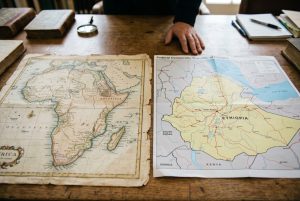
Uncolonized Ethiopia: The Story of Resistance and Freedom

Ethiopia holds a unique place in African history. It is one of only two African countries that were never permanently colonized by a European power. The other is Liberia.
This is not a coincidence or a matter of geography alone. Ethiopia survived the Scramble for Africa through military strength, skilled diplomacy, and the unity of its people.
The defining moment came on March 1, 1896. On that day, an Ethiopian army defeated Italian forces at the Battle of Adwa. The victory secured Ethiopia’s sovereignty and sent a powerful message across the world: Africans could defeat colonial armies.
This article explores how Ethiopia remained uncolonized, the key events that shaped its resistance, and why this history still matters today.
The Treaty That Almost Cost Ethiopia Its Freedom
The road to Adwa began with a treaty. In May 1889, Emperor Menelik II signed the Treaty of Wuchale with Italy. The agreement was meant to promote friendship and trade between the two countries.
But there was a problem. The treaty was written in two languages: Amharic and Italian. And the two versions did not say the same thing.
Article 17 was the critical section. The Italian version stated that Ethiopia was required to conduct all foreign affairs through Italian channels. This effectively made Ethiopia an Italian protectorate, or colony in all but name.
However, the Amharic version simply offered Italy the option to act as a mediator for Ethiopia’s foreign relations. Menelik had agreed to a very different arrangement from what the Italians claimed.
When Menelik discovered the discrepancy, he was furious. He demanded corrections. Italy refused. In 1893, Menelik renounced the treaty entirely.
As one historian noted, the protectorate paragraph of the Wichale Treaty “never had any validity whatsoever”. But Italy was not willing to accept Ethiopia’s rejection.
The Battle of Adwa: A Decisive Victory
Italy decided to force Ethiopia into submission. In 1896, Italian troops marched into northern Ethiopia with modern weapons and high expectations. They would soon learn that Ethiopian resistance was not easily broken.
The battle took place on March 1, 1896, near the town of Adwa. Approximately 80,000 Ethiopian soldiers faced 17,000 Italian troops. The Ethiopian army came from every corner of the country. Peasants, farmers, women, volunteers, artisans, and warriors of all backgrounds marched together to defend their land.
Empress Taytu Betul played a key role. She commanded her own army and was instrumental in the unity and strategy that led to victory.
The outcome was decisive. Around 7,000 Italian soldiers were killed and 1,500 were wounded. Italian General Oreste Baratieri was taken prisoner. Thousands of weapons were seized by Ethiopian forces.
Around 5,000 Ethiopians died defending their country. The victory was achieved through unity and courage, not by having superior technology.
Why Ethiopia Remained Uncolonized
The Battle of Adwa was the turning point. Italy recognized Ethiopia’s full independence in October 1896 with the signing of a peace treaty in Addis Ababa.
Several factors explain why Ethiopia survived while other African nations fell:
Unity across differences. Ethiopians from diverse ethnic, religious, and linguistic backgrounds fought together as one people. This unity was key to their victory.
Skilled leadership. Emperor Menelik II’s strategic thinking and Empress Taytu Betul’s military command brought together forces from across the country.
Diplomatic awareness. Menelik understood the importance of controlling Ethiopia’s foreign relations. When he discovered Italy’s deception, he acted decisively.
Geography. Ethiopia’s mountainous terrain made invasion difficult, though this alone would not have been enough without military resistance.
Italian forces had the advantage of modern weapons. But Ethiopian forces had determination, local knowledge, and the deep conviction that they were fighting to preserve their freedom.
Global Impact: The Birth of Pan-Africanism
The victory at Adwa did more than preserve Ethiopian independence. It changed how the world saw Africa.
The Battle of Adwa cast doubt on the invincibility of European armies. It showed that an African country could organize, strategize, and defeat a colonial power. This shattered the myth of European racial superiority.
The victory immediately resonated across the world. It inspired black populations across Africa, the Caribbean, and the Americas. Pan-African movements drew strength from Ethiopia’s example.
Former African Union Chairperson Nkosazana Dlamini-Zuma called Ethiopia “a very bright star in our continent” and said its uncolonized status made it “a symbol of African resilience and independence”.
Kwame Nkrumah, one of Africa’s most influential freedom fighters, was among those inspired by Ethiopia’s stand. The African Union has its headquarters in Addis Ababa, in part because of Ethiopia’s unique status.

The Second Invasion: Mussolini’s Attempt
Italy did not forget Adwa. In 1935, under dictator Benito Mussolini, Italy invaded Ethiopia for a second time. This time Italy succeeded, and Ethiopian Emperor Haile Selassie was forced into exile.
However, the occupation was not accepted by the Ethiopian people. Resistance continued through a guerrilla war. Italy was driven out in 1941 after five years of occupation.
This period is sometimes seen as colonization, but the distinction is important. Ethiopia was invaded, not peacefully colonized. It was never incorporated into Italy’s African empire as a permanent colony. And unlike other African nations, Ethiopia’s independence was restored after World War II.
Why This History Still Matters Today
The story of uncolonized Ethiopia is more than history. It continues to shape national identity and African pride.
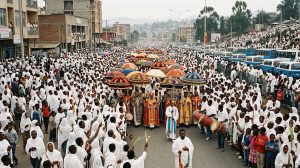
For Ethiopians, the Battle of Adwa is commemorated every year on March 2. It is a reminder of what unity, courage, and resistance can achieve.
For Africa, Adwa remains a symbol of hope. It inspired movements against colonialism and continues to be celebrated across the continent. As one observer noted, the victory “ignited two important phenomenological incidents in Ethiopian and African history including the decolonization of African and the continental vision of Pan-Africanism”.
For the global black community, Ethiopia’s uncolonized status gives it special significance. It stands as proof that colonial power could be resisted.
As the Russian Ambassador to Ethiopia wrote in 2023, the Battle of Adwa “entered the annals of Ethiopian history, marking the tremendous victory of the African people over the European army”.
Quick Tips
- Visit historical sites in Ethiopia. The town of Adwa in northern Tigray is where the famous battle took place. Other nearby sites include Yeha, an ancient capital from 980–400 BC, and the monastery of Aba Garima, founded in the sixth century AD.
- Travel during the right season. Northern Ethiopia can be cold in winter and very hot in summer. The months from October to March are generally the best for travel.
- Respect local traditions. Ethiopian Orthodox Christianity is deeply rooted. Visitors should dress modestly when visiting churches and monasteries.
- Understand the history. Knowing the story of the Battle of Adwa will enrich your visit. Many locals are proud of this history and happy to share it.
- Confirm travel conditions. Conditions in some regions of northern Ethiopia can change. Always check the latest travel advice and local conditions before planning a visit.
Frequently Asked Questions
Why did Ethiopia remain uncolonized?
Ethiopia remained uncolonized due to the decisive victory at the Battle of Adwa in 1896, when Ethiopian forces defeated the Italian army. This was combined with skilled leadership, unity among Ethiopia’s diverse peoples, and a later period of guerrilla resistance after the 1935–1941 Italian occupation.
Which African countries were never colonized?
Only two African countries were never permanently colonized: Ethiopia and Liberia. Ethiopia’s independence came from military victory against Italy. Liberia was founded by freed American slaves and never fell under European colonial rule.
What is the historical significance of the Battle of Adwa?
The Battle of Adwa is historically significant as the first victory of an African army against a European colonial power. It shattered the myth of European invincibility, preserved Ethiopian independence, and inspired Pan-African movements and anti-colonial struggles across the world.
About The Author