The Top 5 Greatest Ethiopian Athletes of All Time
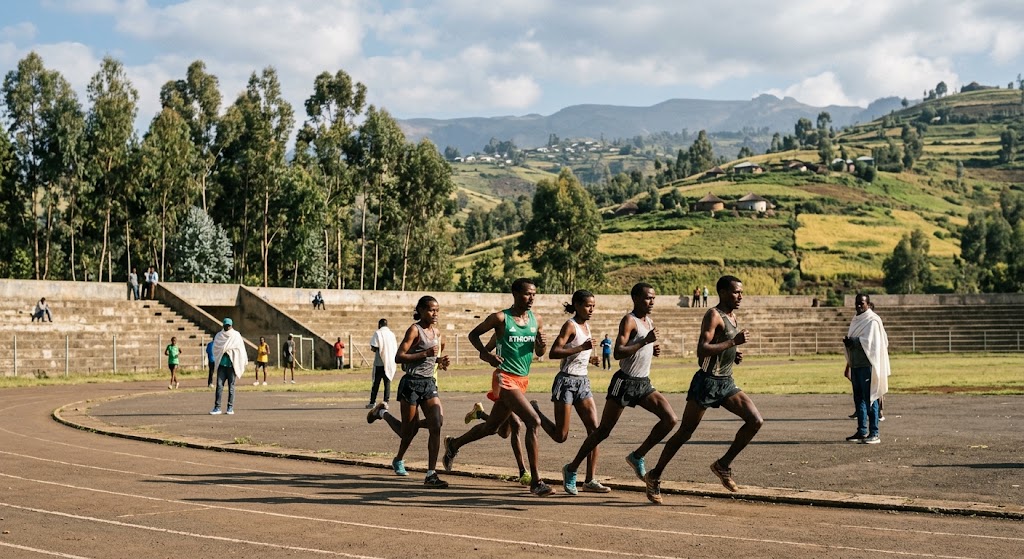
Ethiopia has one of the most remarkable distance-running traditions in the world. Since 1956, the country has won 58 Olympic medals, all in athletics, with 23 of them gold. That is a staggering concentration of success in one sport.
What makes this record more impressive is the depth. Ethiopia has produced not just one or two legends, but a continuous line of champions stretching back more than sixty years. Each generation has pushed the next to go faster.
This article looks at five of the greatest Ethiopian athletes of all time. The ranking considers Olympic success, world records, longevity, and cultural impact. It is not a scientific formula, but it reflects how historians and fans generally view these careers.
Abebe Bikila: The Barefoot Pioneer
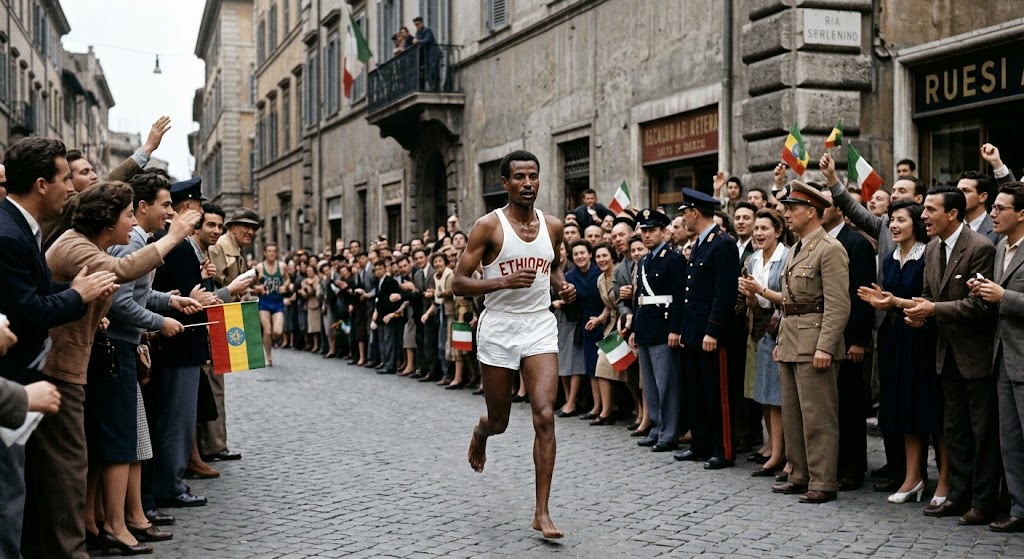
Abebe Bikila is the athlete who started it all. In 1960, he won the Olympic marathon in Rome running barefoot, becoming the first Black African to win Olympic gold in the marathon.
The story is famous for good reason. Bikila was a late addition to Ethiopia’s Olympic team. He ran the entire 42-kilometer race without shoes because the pair provided by the team sponsor did not fit properly. He crossed the finish line at the Arch of Constantine in a world record time of 2:15:16.
Four years later in Tokyo, Bikila defended his title. This time he wore shoes and finished in 2:12:11, another world record. He won by more than four minutes, despite having undergone an appendectomy just 40 days before the race.
Bikila’s career was cut short by a car accident in 1969 that left him paralyzed. He died in 1973 at age 41. But his legacy is enormous. Only three runners in history have won two Olympic marathon golds, and Bikila was the first.
Haile Gebrselassie: The Emperor of Distance Running
Haile Gebrselassie dominated distance running for more than two decades. He won two Olympic gold medals in the 10,000 meters, in 1996 and 2000. He also claimed four consecutive world championship titles in the same event, a level of consistency few athletes have matched.
What truly sets Gebrselassie apart is his world records. He set 27 world records during his career across distances from 1,500 meters to the marathon. This included breaking the 10,000-meter record three times and the marathon record twice.
In 2008, at the Berlin Marathon, Gebrselassie became the first runner to break 2:04, finishing in 2:03:59. That record stood for several years and changed expectations for what was possible in the marathon.
Gebrselassie retired in 2015 at age 42. He remains one of the most recognizable figures in Ethiopian sports and a national hero.
Kenenisa Bekele: The Track Record Holder
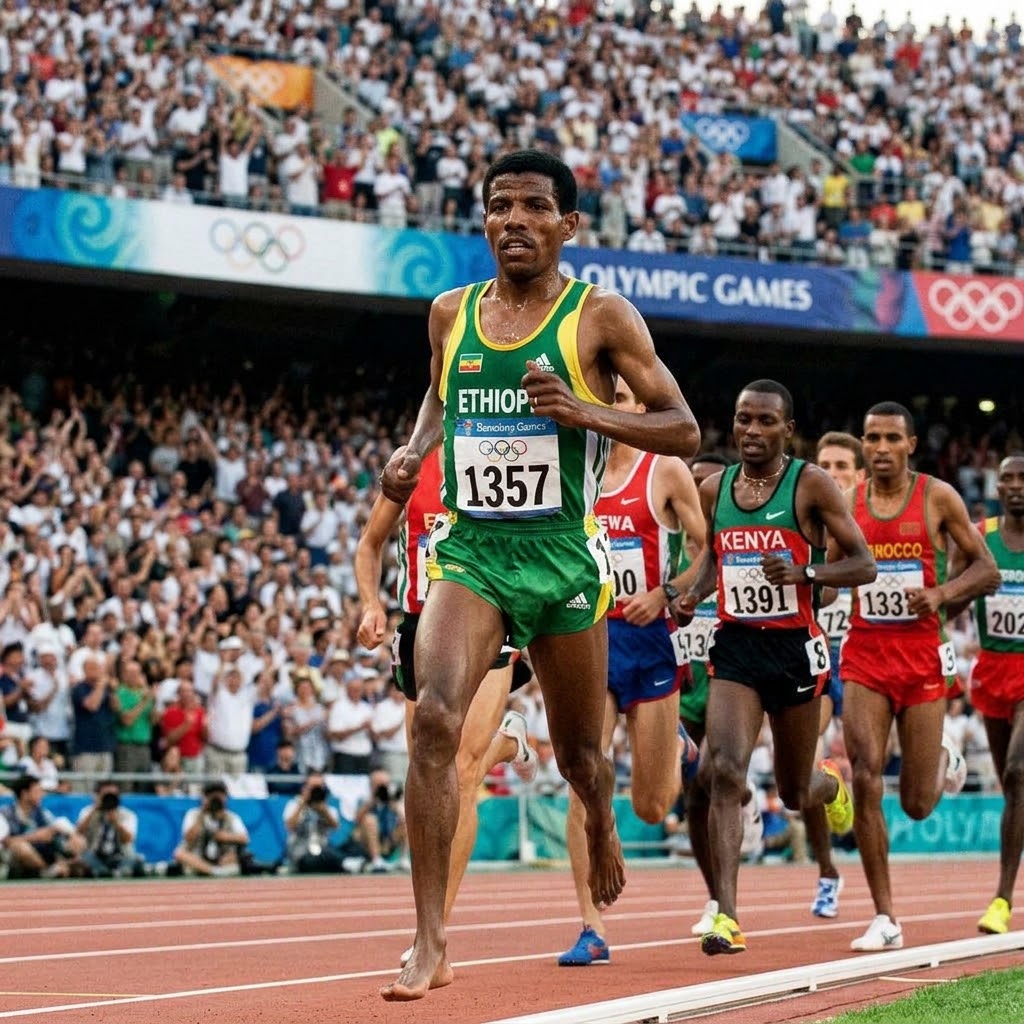
Kenenisa Bekele is often described as the greatest distance runner in history, and the numbers support that claim. He won three Olympic gold medals: the 10,000 meters in 2004, and both the 5,000 and 10,000 meters in 2008.
His world records are the stuff of legend. Bekele set the 5,000-meter world record in 2004 and the 10,000-meter world record in 2005. Both marks stood for more than a decade, despite huge advances in shoe technology and training methods.
Bekele also dominated cross-country running. He won 11 individual world titles in cross-country, the most of any athlete in history . In 2008, he achieved an unprecedented double, winning both the 5,000 and 10,000 meters at the World Championships after doing the same at the Olympics.
What makes Bekele’s career remarkable is its longevity. He transitioned to the marathon later in his career and continued to run at an elite level into his forties.
Tirunesh Dibaba: The Greatest Female Ethiopian Runner
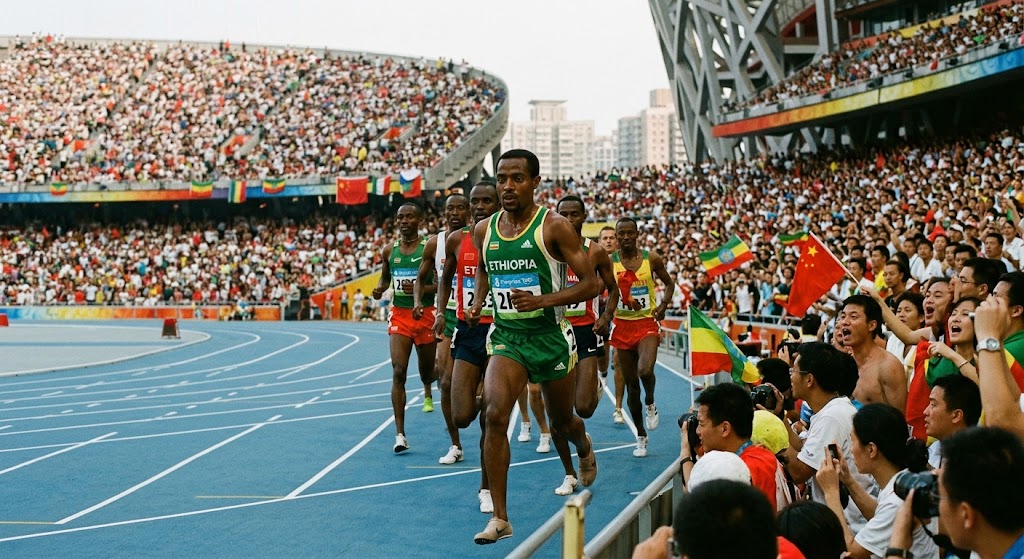
Tirunesh Dibaba holds the record for the most Olympic medals of any Ethiopian athlete, with three golds and three bronzes from 2004 to 2016. Her accomplishments on the track are unparalleled in Ethiopian women’s athletics.
Dibaba became the youngest-ever women’s world champion when she won the 5,000 meters at 17 in 2003 . In 2008, she became the first woman to complete an Olympic double in the 5,000 and 10,000 meters. She then defended her 10,000-meter title at London 2012.
Her finishing kick was legendary. The 5,000-meter world record she set in 2008, 14:11.15, still stands today. She later moved to the marathon and finished third in London in 2014, showing her range.
Dibaba came from a running family. Her cousin is Derartu Tulu, another Olympic champion, and her sister Genzebe is also an elite runner. But Tirunesh’s medal haul makes her the most decorated of them all.
Derartu Tulu: The Trailblazer
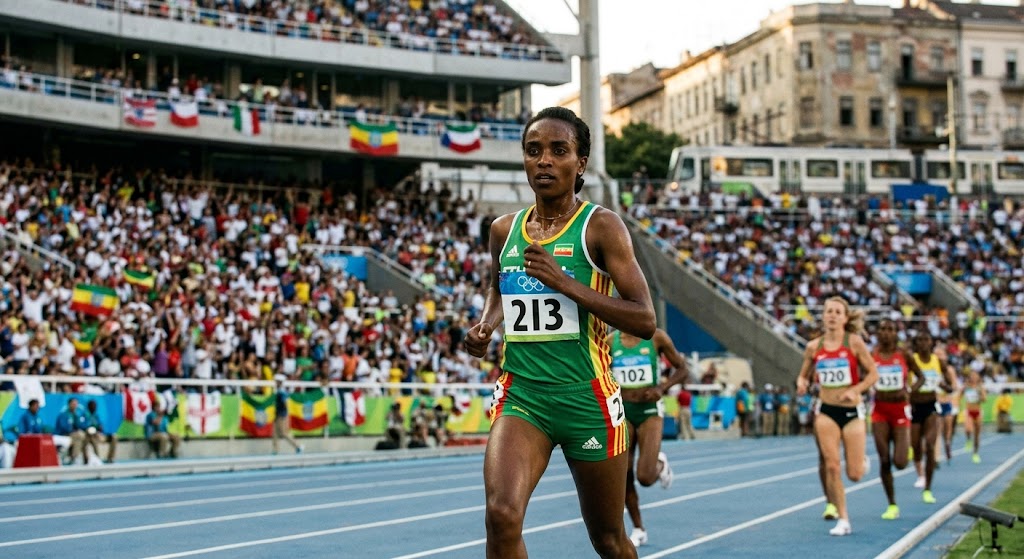
Derartu Tulu was the first Ethiopian woman to win Olympic gold, and her victory in 1992 opened doors for the generation that followed. She won the 10,000 meters in Barcelona, then repeated the feat in Sydney in 2000. She also won a bronze in Athens in 2004.
Tulu’s career spanned nearly two decades at the highest level. She won the World Championship 10,000 meters in 2001 and took silver in 1995. She later moved to the marathon and won the London Marathon in 2001 and the Tokyo Marathon in 2001.
Her impact goes beyond medals. Before Tulu, Ethiopian women had not won Olympic gold in athletics. After her, Tirunesh Dibaba, Meseret Defar, and others built on her example. Tulu is the bridge between Abebe Bikila’s generation and the modern era of Ethiopian women’s running.
Why These Five Stand Apart
Ethiopia has produced many great athletes. Miruts Yifter won two Olympic golds in 1980. Meseret Defar won two Olympic golds and set multiple world records. Almaz Ayana broke the 10,000-meter world record at the 2016 Olympics. The list could go on.
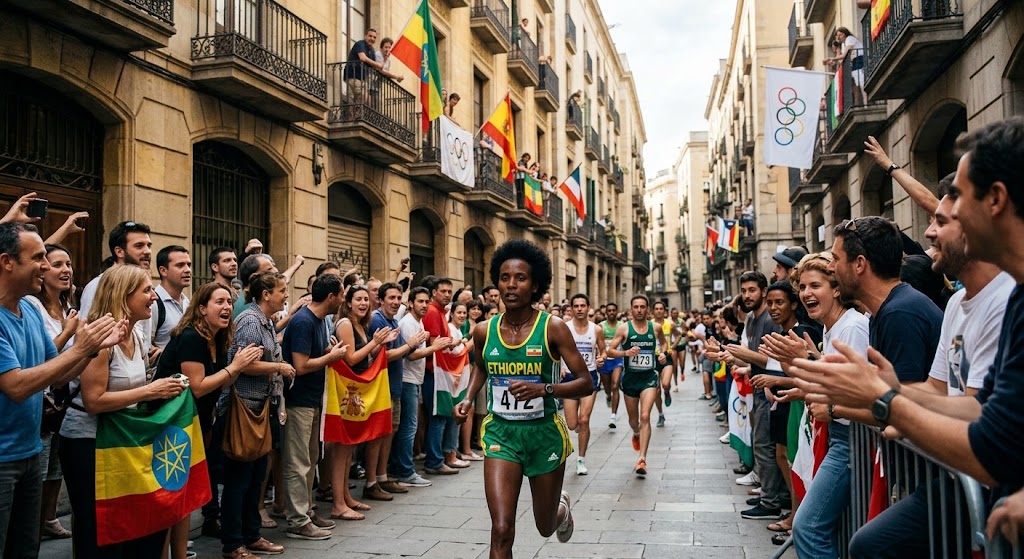
But the five athletes above represent something more than medal counts. Bikila broke barriers. Gebrselassie and Bekele pushed the limits of human speed. Dibaba and Tulu showed that Ethiopian women could dominate the sport.
Their combined impact explains why Ethiopia remains a superpower in distance running despite having a population and GDP far smaller than many rival nations.
Quick Tips
- Watch for Ethiopian runners at major marathons. Berlin, London, Tokyo, and Boston regularly feature Ethiopian elites at the front of the pack.
- Learn the names. Amharic names often include a given name and a father’s name. Gebrselassie, for example, is Haile’s father’s name, not a surname in the Western sense.
- Visit the Ethiopian Athletics Federation for race calendars. Local meets in Addis Ababa and other cities are open to spectators and showcase emerging talent.
- Follow World Athletics for official records. The organization’s website tracks all current world records and athlete profiles.
- Respect the runners’ privacy. Ethiopian athletes are national heroes, but they are also private individuals. Do not approach them during training.
Frequently Asked Questions
Who is the greatest Ethiopian athlete of all time?
Kenenisa Bekele and Haile Gebrselassie are most often named as the greatest. Bekele holds world records and three Olympic golds, while Gebrselassie set 27 world records and won two Olympic golds. Abebe Bikila is considered the pioneer who started Ethiopia’s running tradition.
How many Olympic medals has Ethiopia won?
Ethiopia has won 58 Olympic medals, all in athletics, with 23 gold medals. This includes multiple medals in the marathon, 5,000 meters, and 10,000 meters.
Why is Ethiopia so good at distance running?
Ethiopia’s high altitude, running culture, and competitive domestic scene are often cited. Many elite runners train in the highlands around Addis Ababa and Bekoji, where thin air builds endurance. The country also has a deep tradition of identifying and developing young talent.
Internal Link Opportunities for ethiobrief.com:
- Ethiopian Running Culture: Why Ethiopia Dominates Distance Running — The history, training methods, and cultural factors behind the success.
- Bekoji: The Town That Produces Champions — A look at the small town that has produced multiple Olympic medalists.
- Ethiopian Olympic History — A complete guide to Ethiopia’s participation and medal record.
- Great Ethiopian Run: Addis Ababa’s Biggest Race — Practical guide for participants and spectators.
- Famous Ethiopian Women in Sports — Beyond athletics, including other sports and achievements.
About The Author