Teff: Ethiopia’s Ancient Superfood
For thousands of years, a tiny grain has been growing in the highlands of Ethiopia. It is so small about one millimeter long that it practically disappears on a fingertip. Its name comes from the Amharic word “teffa,” which means “lost.” If you drop it, you may never find it again.
That grain is teff (Eragrostis tef). It is the foundation of Ethiopian cuisine, the flour behind injera, and now one of the world’s most sought-after gluten-free superfoods.
Teff is not a trend in Ethiopia. It has been cultivated there for thousands of years, sustaining communities and shaping food traditions. But outside Ethiopia, teff has only recently gained attention. Its unique nutritional profile, resilience in harsh climates, and naturally gluten-free nature have made it a global star. This guide explains what teff is, where it comes from, why it matters, and what travelers should know about this remarkable grain.
What Teff Is and Why It’s Called a Superfood
Teff is a cereal grain from the grass family. Its scientific name is Eragrostis tef . The plant grows up to about one meter tall. It produces an open, panicle-like head that can hold thousands of tiny grains.
The grain itself is the smallest of all whole cereal grains. It measures roughly 1.0 mm long and 0.6 mm wide. That tiny size is what gives teff its name and its unique baking properties. The entire grain is used as flour, meaning teff flour is always whole grain. The bran and germ are not removed because they cannot be separated from the endosperm.
Teff is called a “superfood” for several reasons. It is naturally gluten-free. It is rich in protein, fiber, calcium, iron, and essential amino acids. It has a low glycemic index, which means it digests slowly and does not spike blood sugar. And it is a hardy crop that can grow in conditions where other cereals fail.
Teff’s Origins in the Ethiopian Highlands
Teff is indigenous to Ethiopia and Eritrea. It is the only country in the world that uses teff as a major cereal crop. Its domestication likely occurred several centuries BC in northern Ethiopia.
The exact details of how teff was domesticated are unclear. But by the time Semitic-speaking peoples crossed the Red Sea from the Arabian Peninsula in the first millennium BC, the local Cushitic-speaking peoples were already cultivating it.
Teff spread slowly. It was transmitted to Yemen across the Red Sea, but it barely moved beyond that region. In the 19th century, it was introduced to South Africa as a fodder crop. In the late 20th century, Ethiopian migrants brought it to the United States, where it is now cultivated commercially in states like Idaho.
Today, Ethiopia remains the global center of teff production and genetic diversity. The Ethiopian Biodiversity Institute has conserved thousands of teff accessions for research and variety improvement.
Why Injera Made Teff Famous
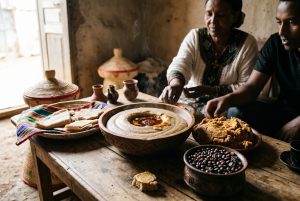
If you have eaten Ethiopian food, you have eaten teff. The most famous use of teff is injera, the spongy, sour flatbread that serves as both plate and utensil in Ethiopian dining.
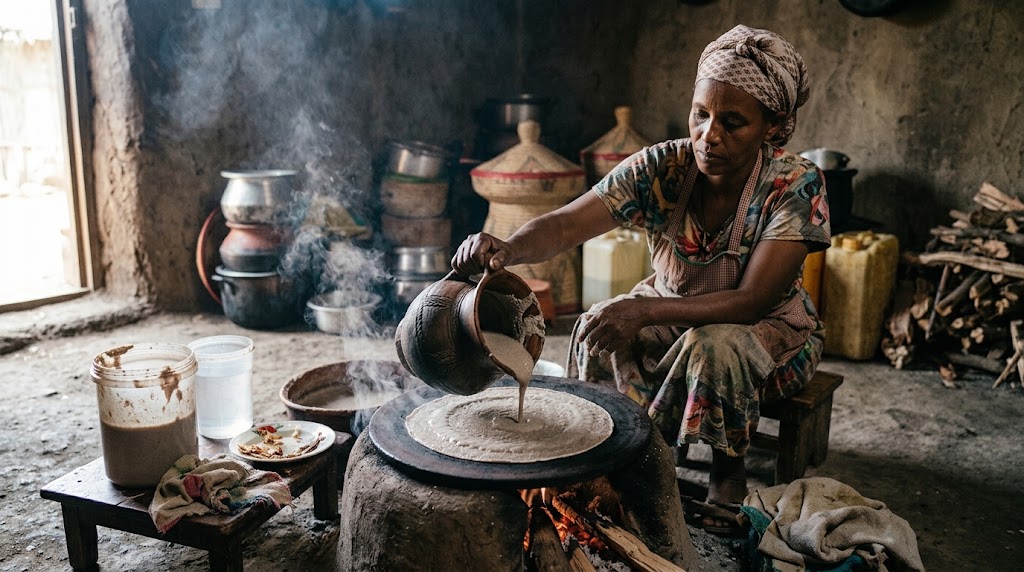
Injera is made by fermenting teff flour with water for several days. The batter becomes slightly sour and bubbly. It is then poured onto a hot clay griddle and cooked on one side. The result is a large, circular flatbread covered in tiny holes, soft and pliable.
Injera is not just a side dish. It is the foundation of the meal. Stews, vegetables, and salads are served on top of it. Diners tear off pieces and use them to scoop up bites. By the end of the meal, the injera has absorbed all the flavors of the dishes.
Teff is what makes injera possible. Other grains can be used, but teff produces the characteristic texture and sourness that Ethiopians recognize. The grain’s unique starch properties create the spongy structure that no other flour can replicate.
The Nutritional Power of Teff
Teff’s nutritional profile is what has driven its global popularity. Here is what makes it stand out.
It is naturally gluten-free. Teff lacks the gluten proteins found in wheat, barley, and rye. Studies have found no gluten or gluten-like proteins in teff varieties tested. This makes it safe for people with celiac disease.
It is rich in essential minerals. Teff contains higher levels of calcium, iron, and zinc than wheat, barley, maize, and oats. The high iron content is notable. Some researchers believe this contributes to lower rates of anemia in Ethiopia, though the country still faces significant nutritional challenges.
It has a balanced amino acid profile. Teff contains all eight essential amino acids, making it a complete protein source. Its lysine content is higher than wheat or barley.
It has a low glycemic index. Teff’s slow-digesting carbohydrates help maintain steady blood sugar levels. This makes it a good choice for people managing diabetes.
It is high in fiber. Because teff flour is whole grain, it retains all the bran and fiber. The fiber content is around 10.9 percent.
Teff Farming and Production in Ethiopia
Teff is critical to Ethiopian agriculture and food security. It is cultivated on about 2.3 to 2.76 million hectares of land, making it the largest cereal crop by area in the country . It contributes roughly 17 percent of Ethiopia’s total grain production.
More than 6.5 million farmers grow teff. An estimated 25 to 30 million people depend on teff production directly or indirectly. It is a livelihood crop, a food security crop, and a cultural staple all at once.
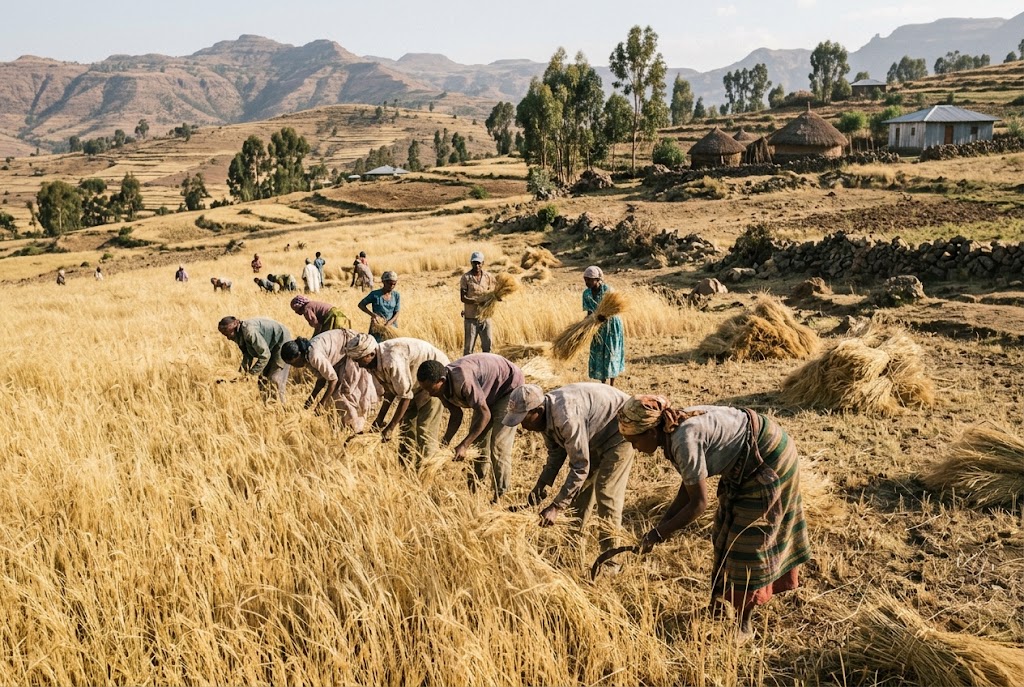
Teff is well-suited to Ethiopia’s highlands. It grows from sea level up to 2,800 meters. It tolerates both drought and waterlogged conditions better than other cereals. Its growing season is short about three months making it valuable in areas with unpredictable rainfall.
The crop is often planted without covering the seeds with soil. Farmers believe the tiny seeds cannot push through if buried. This leaves them vulnerable to birds, but farmers are more concerned about whether rain will come within a week of sowing.
Teff straw is also valuable. It is used as livestock feed, especially for oxen after plowing. The straw is stored and fed during the dry season when other forage is scarce.
Teff’s Global Rise and the Export Question
Teff has become a global commodity. The gluten-free food industry is worth billions of dollars, and teff is one of its star ingredients. Ethiopia exports teff grain, flour, and processed products to the United States, Europe, and the Middle East.
However, this has created tension. Teff is a staple food in Ethiopia. When prices rise, poorer households can struggle to afford it. Ethiopia imposed an export ban on raw teff to protect domestic food security. The ban prioritizes local consumption but limits farmers’ potential income from international sales.
The Ethiopian government faces a difficult balance. Encouraging commercial teff farming could increase farmer incomes and export earnings. But it also risks shifting land away from food crops and making teff less accessible to local consumers.
For travelers, this context matters. Teff is not just a trendy health food. It is a crop with deep cultural and economic significance in the country where it originated.
What Travelers Should Know About Teff
Try injera. The best way to experience teff is through injera. You will find it at any Ethiopian restaurant. The sour, spongy flatbread is unlike anything else.
Look for teff in other foods. Teff flour is increasingly used in porridges, breads, cookies, and even beverages. Some cafes in Addis Ababa offer teff-based options.
Understand the fasting connection. During Ethiopian Orthodox fasting periods, injera and teff-based dishes become even more central. Because they are plant-based, they fit naturally into the fasting diet.
Buy teff products to take home. Teff flour and teff-based snacks are available in markets and specialty shops. Check customs regulations before bringing them into your home country.
Visit during harvest season if possible. Teff is typically harvested from October through January. The fields turn golden, and you may see traditional harvesting methods in rural areas.
Quick Tips
- Teff is gluten-free, but check labels. If you have celiac disease, confirm that products are made with pure teff and not blended with wheat flour.
- White teff is the premium variety. It is the most expensive and preferred for injera. Red and brown teff are cheaper and have higher iron content.
- Try teff porridge for breakfast. It is a nutritious alternative to oats and is common in Ethiopian households.
- Support local farmers when possible. Buying teff products directly from Ethiopian producers supports rural livelihoods.
- Understand that teff is more than a health food. For Ethiopians, it is a staple crop tied to culture, identity, and food security.
Frequently Asked Questions
What is teff used for?
Teff is primarily used to make injera, the spongy flatbread that is the foundation of Ethiopian cuisine. It is also used in porridges, baked goods, and increasingly in gluten-free products worldwide.
Is teff safe for people with celiac disease?
Yes. Research has found no gluten or gluten-like proteins in teff varieties tested. It is considered safe for people with celiac disease and gluten sensitivity.
Why is teff so expensive outside Ethiopia?
Teff is expensive internationally because production is concentrated in Ethiopia, and export supplies are limited. Ethiopia has restricted raw teff exports to protect domestic food security. This scarcity drives up prices in global markets.
other Posts From EthioBrief:
- 5 Reasons Injera Is the True Star of the Ethiopian Dining Table — How Injera becomes the foundation of Ethiopian meals.
- Ethiopian Orthodox Fasting Food: What to Eat and When — what and when Ethiopians Orthodox Use Each Food Dooring Fasting.
- Marqaa, Chuko & Buna Qalaa: A Taste of Oromo Culture — Other traditional grains and foods.
- Ethiopian Coffee Ceremony: A Complete Guide — The ritual that follows a teff-based meal.
About The Author