Abyssinia to Ethiopia: The Evolution of a Name
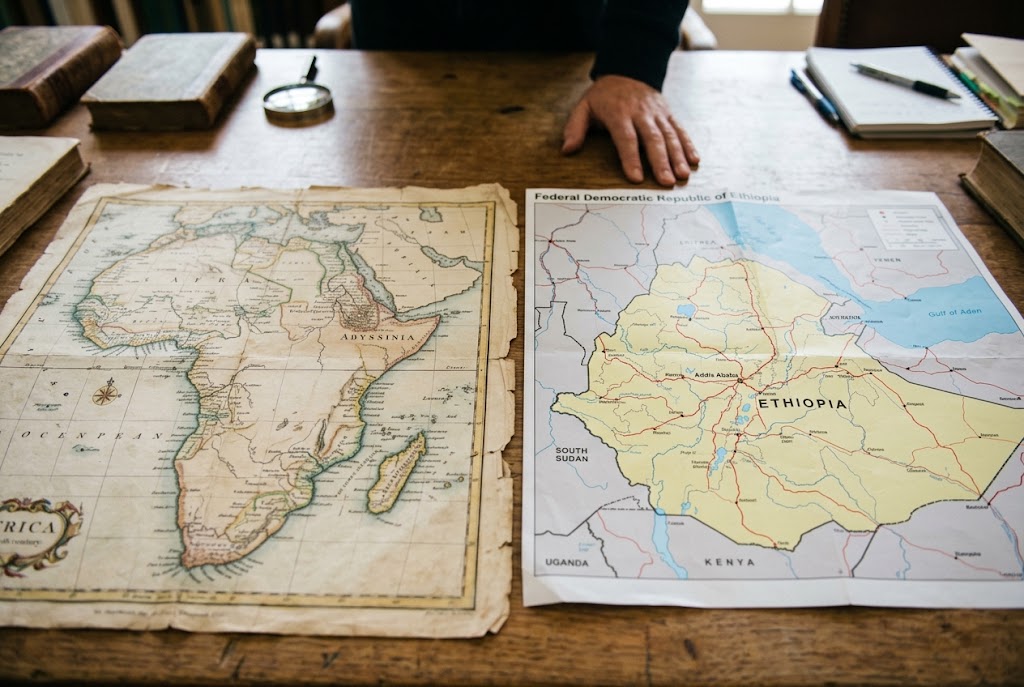
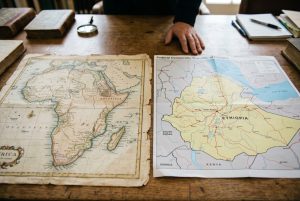
For centuries, maps of Africa showed a large highland nation labeled Abyssinia. Today, that same land is called Ethiopia. The shift from one name to the other was not a simple rebranding. It involved centuries of foreign usage, local resistance, and a political decision made in the middle of the twentieth century.
The story of how Abyssinia to Ethiopia happened is also a story about identity. It explains why Ethiopians today prefer one name over the other. And it reveals how outsiders and insiders can see the same country in very different ways.
The Two Names and Where They Come From
Abyssinia and Ethiopia are both old names. They come from different languages and different histories. They were used side by side for centuries, often interchangeably by outsiders, but with very different meanings for locals.
Abyssinia: The Arabic Root
The name Abyssinia comes from the Arabic word Habash or Habasha. It referred to the peoples of the Ethiopian highlands. One early source says it entered European languages through Portuguese, who borrowed it from Arabic.
The meaning of Habash is debated. Some sources say it means “mixed” or “to gather,” referring to the mixture of peoples in the region. This is one reason many Ethiopians dislike the name. They feel it carries a hint of “mongrel” or impurity.
By the thirteenth century, the name “Abyssinia” was appearing in European sources. It became the standard way outsiders referred to the highland kingdom.
Ethiopia: The Greek Root
Ethiopia comes from Greek. It is made of two parts: aithō (I burn) and ops (face). Together, it means “land of the burnt-faced people” or “land of the dark-skinned peoples”.
In classical times, the name was used loosely for lands south of Egypt. It did not always refer to the specific highland kingdom. The first known use of “Ethiopia” for this region appears in a Greek inscription from the time of King Ezana, who brought Christianity to Aksum in the fourth century.
The name entered Ethiopian literature through the Ge’ez translation of the Bible. The Hebrew word “Cush” was translated as “Ethiopia” in Greek. This gave the name biblical weight. Later, the Kebra Nagast, a fourteenth-century text, solidified the link between Ethiopia and the biblical world.
Why Ethiopians Preferred Ethiopia
For centuries, Ethiopians themselves preferred the name Ethiopia. Historical records show that locals rejected “Abyssinia” and “Habash” as insulting terms. To call someone an “Abyssinian” in some contexts was compared to calling them a “mongrel” or “outcast”.
The name Ethiopia, by contrast, carried dignity. It connected the country to ancient history and to the Bible. Ethiopian rulers styled themselves “King of Kings of Ethiopia” from the thirteenth century onward.
This does not mean Abyssinia was never used locally. In informal settings, Ethiopians sometimes referred to themselves as Habasha. But officially, and especially in relations with the outside world, Ethiopia was the name of choice.
The 1941 Decree and the Official Change
For much of the early twentieth century, the outside world still used Abyssinia. Newspapers in the 1930s wrote about “Abyssinia” during the Italian invasion. The name was on maps and in history books.
That changed during World War II. After Italy was defeated and Emperor Haile Selassie returned to power, he made a decision. In 1941, he decreed that the country would be officially known as Ethiopia.
The timing made sense. The war had drawn international attention to the country. The emperor wanted the world to use the name that Ethiopians themselves preferred. The decree was not a new invention. It was an official confirmation of a name that had deep roots in Ethiopian history and scripture.
Some sources say the choice was also strategic. Ethiopia was admitted to the League of Nations under that name, and the name carried historical prestige. By making it official, Haile Selassie aligned the country’s international identity with its ancient heritage.
What About Habesha Today?
The name Habesha is still widely used. It refers to the peoples of the highlands, particularly the Amhara and Tigrayan communities. It is a cultural and ethnic term, not a national one.
Many Ethiopians use “Habesha” among themselves in informal settings . It has a different feel than the English word “Abyssinian.” It is less formal, and it does not carry the same historical baggage from foreign usage.
For travelers, the distinction matters. Calling the country “Abyssinia” is outdated. Using “Habesha” to describe a person or a cultural tradition can be appropriate if used respectfully. But the country’s name is Ethiopia.
Why the Name Still Matters
The name change was not just about semantics. It was about who gets to define a country. For centuries, outsiders used a name derived from Arabic. Ethiopians preferred a name rooted in their own scripture and history.
When Haile Selassie made the change official, he was not erasing the past. He was asserting a national identity that had existed for centuries.
Today, you will still see “Abyssinia” in old books, historical maps, and sometimes in travel writing. It is not wrong to know the term. But using it for modern Ethiopia is inaccurate. The country’s official name, and the name its people use, is Ethiopia.
For visitors, understanding this history adds depth to the experience. It explains why the name on the map matters. It also explains why a country that was never colonized has fought so hard to define itself.
Quick Tips
- Use “Ethiopia” when speaking about the modern country. “Abyssinia” is historical and outdated for everyday use.
- Learn the word “Habesha.” It is a cultural term for highland Ethiopians, often used informally. It is not the same as “Abyssinian.”
- Ask before using historical names. Some Ethiopians have strong feelings about the term “Abyssinia” due to its associations with foreign usage and the “mixed” meaning.
- Visit the National Museum in Addis Ababa. It has exhibits on Ethiopian history that explain the country’s ancient roots and the names used over time.
- Notice the names in context. Old churches and texts may use “Ethiopia” in Ge’ez long before the 1941 decree. The name has deep local roots.
Frequently Asked Questions
Why is Ethiopia called Ethiopia and not Abyssinia?
Ethiopia comes from a Greek word meaning “land of burnt faces.” It was used in ancient times and adopted by Ethiopian rulers through biblical translation. Abyssinia comes from Arabic and was often used by outsiders. Ethiopians preferred Ethiopia, and Emperor Haile Selassie made it official in 1941.
What does Abyssinia mean?
Abyssinia comes from the Arabic “Habash,” which some sources say means “mixed” or “to gather.” This meaning is one reason many Ethiopians dislike the name, as it can imply mixed or impure blood.
Is it okay to say Abyssinia today?
No, for the modern country, use Ethiopia. “Abyssinia” is a historical term found in old maps and books. Using it for present-day Ethiopia is outdated and may be seen as inaccurate or disrespectful.
About The Author