Marqaa, Chuko & Buna Qalaa: A Taste of Oromo Culture
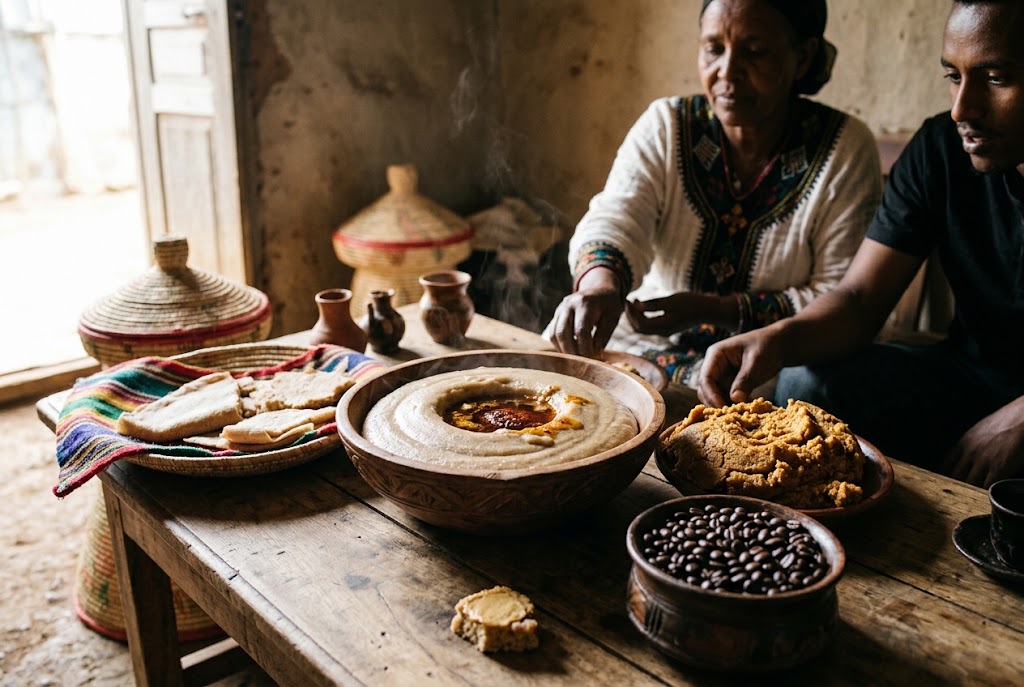
Oromo food traditions are some of the least understood parts of Ethiopian cuisine. Most travelers know injera and doro wat. But the Oromo people, Ethiopia’s largest ethnic group, have their own distinct culinary heritage. It is built on barley, butter, milk, and coffee ingredients that have sustained highland communities for generations.
Three dishes stand out: Marqaa, Chuko, and Buna Qalaa. Each one is simple in its ingredients. But each carries deep meaning within Oromo culture. They are foods for celebrations, for travel, for welcoming guests, and for marking the passages of life.
This guide explains what these dishes are, how they are made, and what visitors should know about experiencing them.
What Makes Oromo Food Distinct
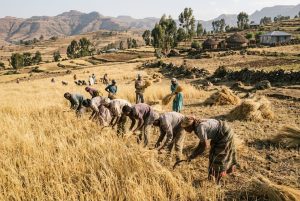
Oromo cuisine differs from the better-known Amhara and Tigrayan food traditions. Where injera dominates in the north, Oromo cooking relies more heavily on barley. The highlands of Oromia are ideal for growing barley, and the grain appears in many forms: roasted, ground, fermented, and mixed with butter.
Butter is another cornerstone. Oromo cuisine uses generous amounts of dhadhaa, clarified butter that is often spiced. It adds richness and flavor to porridges, snacks, and coffee dishes.
Milk and yoghurt also play major roles. Cattle are central to Oromo life, and their milk is used fresh, fermented, and in ceremonial dishes.
These ingredients reflect the Oromo relationship with the land. Barley grows in the highlands. Cattle provide milk and butter. Coffee grows in the forests. The food is not complicated, but it is deeply connected to place.
Marqaa: The Barley Porridge That Feeds Celebrations
Marqaa is one of the most popular dishes across Oromia. It is a porridge made from barley flour, cooked and mashed for a long time until it reaches a soft, smooth consistency.
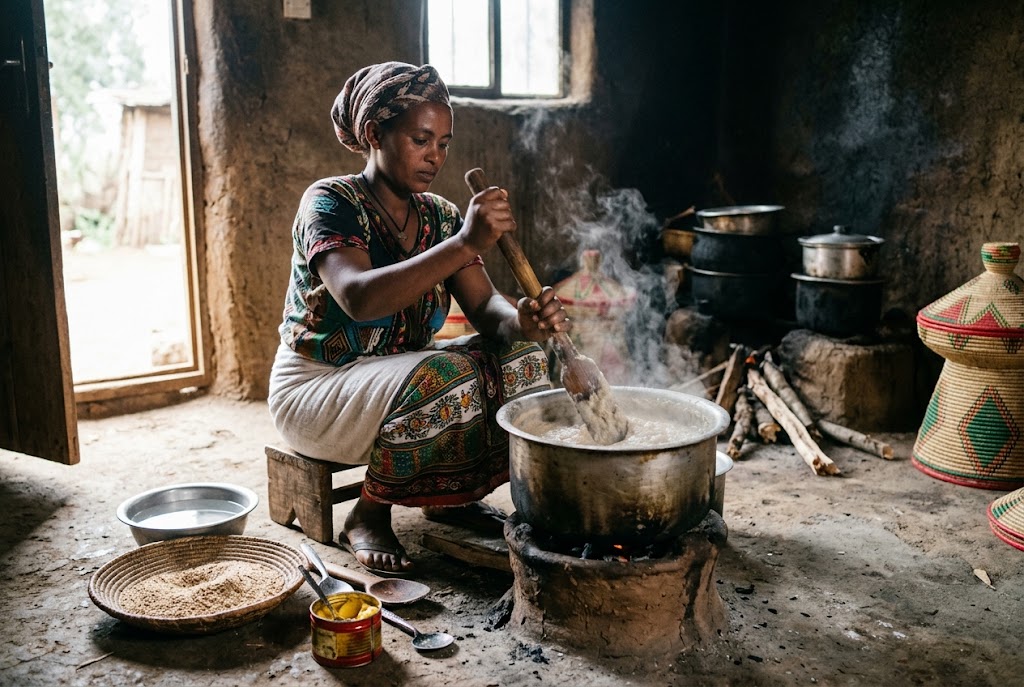
The preparation is simple but takes patience. Barley flour is mixed with water and cooked over a fire. The cook stirs and mashes the porridge continuously. When it is ready, a hole is made in the center of the bowl. Into that hole, melted dhadhaa (butter) mixed with barbaree (chili spice) is poured.
The result is a warm, comforting dish. The butter soaks into the porridge, creating a rich, savory flavor. It is eaten with a spoon, often one made from animal horn, called a fal’aana.
When Marqaa Is Served
Marqaa is both an everyday food and a ceremonial dish. It is eaten for breakfast, as a main meal, or as part of celebrations.
One important occasion is the silgaa ceremony. This is celebrated when a cow gives birth. The owner prepares Marqaa to share with neighbors. The milk from the cow is left for the calf for the first five days. Then it is collected and fermented into yoghurt for fifteen to twenty-one days. On the day of the ceremony, Marqaa and Buna Qalaa are prepared, and neighbors are invited to feast. They eat, drink the yoghurt, and then bless the cow and its owner.
The blessings are specific and beautiful. They ask for the cattle to multiply, for the corral to be full, for the cow to give milk, and for evil to be kept away.
Marqaa also appears at weddings, holidays, and family gatherings. It is a food that brings people together.
Chuko: The Travel Food That Lasts a Year
Chuko is a snack food made from roasted barley powder mixed with butter and spices. It is dense, rich, and designed to last.
The preparation is straightforward. Barley is husked and roasted over a fire. Then it is pounded into a fine powder. Butter, ginger, onion, salt, and other spices are added and mixed in. The result is a thick paste that can be formed into portions.
Chuko is not a light snack. It is heavy and filling. Individual portions can range from two to five kilograms. The high butter content gives it protein and energy. It can be stored for up to a year without spoiling.
This long shelf life made Chuko valuable for travelers. Students going away to university, people on long journeys, and soldiers on campaigns would carry Chuko as a reliable food source.
Chuko in Oromo Traditions
Chuko is part of everyday diet, but it also has ceremonial importance.
For Oromo weddings, Chuko is traditionally prepared by the bride’s parents and served to the groom’s best men . It is a way of showing respect and providing sustenance for the guests.
Chuko is also prepared for holidays and festivals. It is considered especially good for postnatal women, who need nutrient-dense food to recover.
In some communities, the ability to make good Chuko is a mark of a skilled woman. A saying goes: “Look at the mother, marry the daughter”. This reflects the belief that a woman’s cooking ability reflects her character and upbringing.
Today, Chuko is becoming harder to prepare. The large amount of butter required makes it expensive. Some families are replacing it with imported products. But the tradition continues in rural areas and among families who value their heritage.
Buna Qalaa: Coffee as a Meal, Not a Drink
Buna Qalaa is perhaps the most culturally significant of the three dishes. It is a coffee meal not a beverage, but a food made from coffee beans cooked in butter.
The name literally means “slaughtered coffee” . It refers to the ritualized preparation and consumption of coffee beans as a ceremonial meal.
How Buna Qalaa Is Made
The preparation is precise and takes time. Only ripe coffee cherries are used. They are sun-dried whole, with the parchment still intact. Before cooking, the tip of each bean is slightly cut traditionally with the teeth to allow the butter to seep inside.
A clay pot called a kelo is heated. Butter is melted first. Then the beans are added and stirred gently until they reach a light, even roast. The buttery beans are transferred to a wooden bowl called a kori. Hot milk, boiled in the same pot, is poured over them. The mixture is served in a cup called a mudunu.
The result is rich and aromatic. The butter penetrates the beans, making them soft and flavorful. They are chewed slowly, like gum. The dish is filling and provides long-lasting energy.
The Meaning of Buna Qalaa
Buna Qalaa is more than food. It is a ritual that marks important moments in life.
It is prepared for births, naming ceremonies, weddings, and reconciliations. It is offered at the end of mourning periods. In the Gadaa system, elders use it as a sign of respect and continuity.
The symbolism runs deep. The coffee bean, with its shape, is associated with fertility and the female organ. Cutting the bean’s tip symbolizes the breaking of virginity and the beginning of life-giving potential. Because of this, Buna Qalaa is never eaten alone. It is shared, just as life is shared.
Women play a central role in preparing Buna Qalaa. They are the ones who “slaughter” the coffee. The ritual is tied to womanhood and motherhood. A house without a wife is said to have no fire for this preparation.
The butter used in Buna Qalaa is also used in peace-making rituals. It is smeared as a sign of reconciliation.
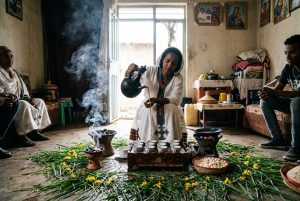
Buna Qalaa is part of the broader Oromo coffee tradition. Coffee is used in daily life, in medicine, and in rituals. It is not just a drink. It is a symbol of fertility, well-being, and community connection.
How to Experience These Foods
For travelers interested in Oromo culture, experiencing these dishes requires some planning.
Where to find them: Marqaa and Chuko are most easily found in Oromia region, particularly in towns like Adama, Bishoftu, and Jimma. Buna Qalaa is more specialized. It is most commonly prepared in southern Oromia, especially among the Guji and Borana communities.
When to try them: Marqaa and Chuko are available year-round. Buna Qalaa is prepared for special occasions. If you visit during a festival or ceremony, you may have the chance to taste it. The Irreecha festival in October is a good opportunity to experience Oromo food traditions.
How to ask: In Afaan Oromo, you can ask for “Marqaa”, “Chuko”, or “Buna Qalaa”. Learning a few words of Afaan Oromo shows respect and often opens doors. “Galatoomi” means thank you.
What to expect: Marqaa is served warm, often in a bowl with butter pooled in the center. Chuko is a dense paste, eaten in small amounts. Buna Qalaa is served in small cups, with the beans chewed slowly.
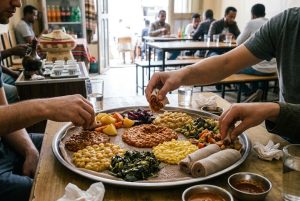
Etiquette: These are often shared foods. If you are offered a taste, accept it. It is a sign of hospitality. The Oromo practice of dhandhamsisuu offering someone a taste is common. You may be offered food by hand or with a traditional spoon.
Quick Tips
- Learn the word “dhadhaa.” It means butter in Afaan Oromo, and it is central to these dishes. Understanding it helps you appreciate what you are eating.
- Visit during Irreecha if possible. The October festival is the best time to see Oromo cultural traditions, including food, music, and dress.
- Try Marqaa for breakfast. It is a common morning meal in Oromo households and a gentle introduction to the cuisine.
- Carry Chuko on long hikes. Its high energy content and long shelf life made it a traditional travel food. It works just as well for modern trekkers.
- Ask before photographing food preparation. Some rituals have spiritual significance. Always ask permission before taking photos.
Frequently Asked Questions
What is Marqaa made of?
Marqaa is a porridge made from barley flour, cooked until smooth and soft. A hole is made in the center, and melted butter mixed with chili spice is poured in. It is a staple in Oromo cuisine and is served at both everyday meals and celebrations.
Why is Buna Qalaa called “slaughtered coffee”?
The name refers to the ritualized preparation of coffee beans as a meal. The beans are cooked in butter, and their tips are cut before cooking. The term “slaughtered” reflects the ceremonial nature of the dish and its association with life passages and fertility.
Can visitors try these Oromo dishes in Addis Ababa?
Yes, though it may require some searching. Some Oromo restaurants in Addis Ababa serve Marqaa and Chuko. Buna Qalaa is harder to find outside Oromia region, as it is prepared for specific ceremonies. Visiting Oromia towns like Bishoftu or Adama increases your chances.
Other Posts From EthioBrief:
- Irreecha Festival: Oromo Thanksgiving Explained — The best time to experience Oromo culture.
- Ethiopian Orthodox Fasting Food: What to Eat and When— The broader coffee tradition in Ethiopia.
- 5 Reasons Injera Is the True Star of the Ethiopian Dining Table— Comparison with other Ethiopian cuisines.
- Teff: Ethiopia’s Ancient Superfood — Another indigenous grain with cultural significance.
- Visiting Oromia: Towns, Landscapes, and Culture — A travel guide to the region.
- The World’s Most Famous Dishes: A Global Culinary Adventure
About The Author