Ethiopian Cultural Festivals Calendar: A Traveler’s Guide
Ethiopia follows its own calendar. The country uses the Ge’ez calendar, which has 13 months and runs about seven to eight years behind the Gregorian calendar. This means Ethiopian festivals fall on different dates each year when viewed from the outside. For travelers, this is both a challenge and an opportunity.
The Ethiopian cultural festivals calendar is packed with celebrations that blend Orthodox Christian tradition, Oromo cultural heritage, and national history. Some are solemn religious observances. Others are massive street parties with music, dancing, and thousands of participants. All of them offer a window into a country that has preserved its identity for centuries.
This guide covers the major festivals you should know about, when they happen, and where to experience them. It also includes practical advice for visitors who want to attend respectfully.
How the Ethiopian Calendar Works
Before diving into individual festivals, it helps to understand the calendar system. The Ethiopian calendar has 12 months of 30 days each, plus a short 13th month called Pagume with five or six days. The Ethiopian New Year falls on September 11 in the Gregorian calendar (September 12 in leap years).
This calendar difference means Ethiopian festivals occur on different Gregorian dates each year. For example, Ethiopian Christmas (Genna) is always January. Timkat (Epiphany) is January 19. But Ethiopian Easter (Fasika) moves because it follows the Orthodox calculation, which differs from Western Easter.
Some festivals follow the Islamic lunar calendar, like Eid al-Fitr and Eid al-Adha. These dates shift each year by about 11 days. The dates listed below are for 2026 and are subject to change based on moon sightings and official announcements.
January: Genna and Timkat
The year starts with two major Orthodox celebrations.
Genna (Ethiopian Christmas) — January 7, 2026
Genna marks the birth of Jesus Christ according to the Ethiopian Orthodox Church. It is a public holiday across the country.
The celebration begins with a fast on Christmas Eve. Many Orthodox Christians abstain from meat and dairy on January 6. On the morning of January 7, families attend church services, often starting before dawn. Afterward, they gather for a festive meal that typically includes doro wat (spicy chicken stew) and injera.
Where to experience it: Lalibela is the most atmospheric place for Genna. The rock-hewn churches fill with pilgrims in white shawls. Services are long, but the setting makes it memorable. Gondar and Axum also offer meaningful celebrations.
Timkat (Epiphany) — January 19, 2026
Timkat celebrates the baptism of Jesus in the Jordan River. It is one of the most visually striking festivals in Ethiopia.
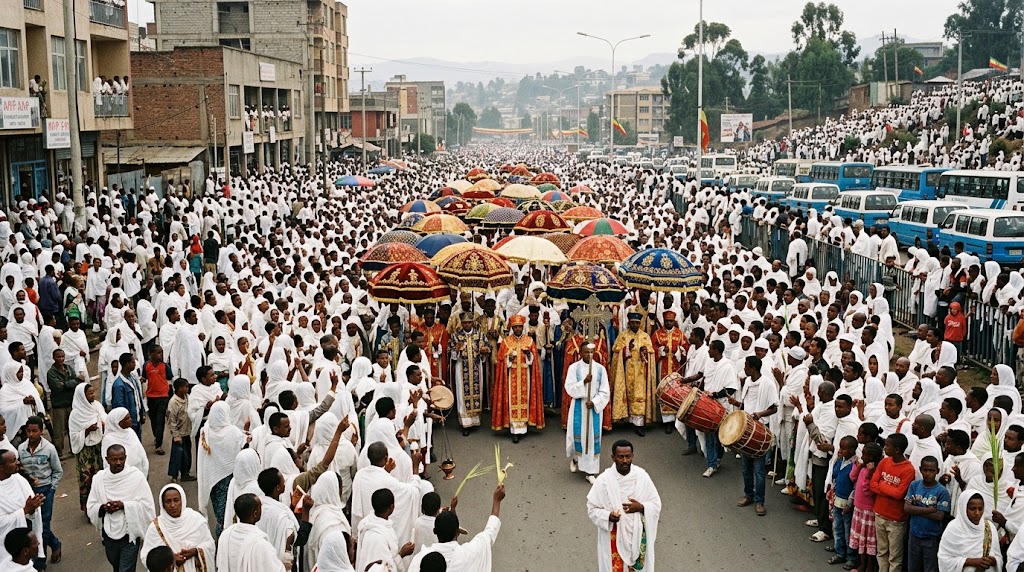
The celebration spans three days. On the eve of Timkat, churches hold processions called Tabots. These are replicas of the Ark of the Covenant, carried under colorful velvet umbrellas. Priests, deacons, and worshippers walk through the streets to a nearby body of water. On the morning of Timkat, the water is blessed and sprinkled on the crowd. The Tabots are then returned to the churches in another procession.
Where to experience it: Gondar is famous for its Timkat celebration at the Fasilides Bath. The pool is filled with water, and the ceremony draws thousands. Lalibela also hosts a major celebration. In Addis Ababa, Jan Meda and other open areas host large gatherings.
March and April: National Holidays and Fasika
Spring brings a mix of national remembrance and Orthodox Easter.
Adwa Victory Day — March 2, 2026
Adwa Victory Day commemorates the Ethiopian victory over Italian forces at the Battle of Adwa in 1896. It is a public holiday and a source of national pride.
The main celebrations take place in Adwa and Axum in the Tigray region, though events occur nationwide. Expect parades, cultural performances, and speeches.
Fasika (Ethiopian Easter) — April 12, 2026
Fasika is the most important holiday in the Ethiopian Orthodox calendar. It celebrates the resurrection of Jesus Christ.
The celebration is preceded by Hudadi and Siklet, a 55-day fast during which Orthodox Christians abstain from meat, dairy, and eggs. On Good Friday (April 10, 2026), churches hold solemn services. At midnight on Saturday, the Easter Vigil begins. Church bells ring, candles are lit, and the fast is broken with a feast.
Where to experience it: Lalibela offers a midnight mass at Bete Medhane Alem that is often described as unforgettable. Axum and Gondar also host significant celebrations. In Addis Ababa, many churches hold services, and families gather for large meals on Easter Sunday.
May: Patriotic Celebrations
Patriots’ Victory Day — May 5, 2026
Patriots’ Victory Day commemorates the defeat of Italian occupation forces in 1941. It is a public holiday with parades and events honoring Ethiopian resistance fighters.
August and September: The Season of Renewal
This period is the richest for cultural festivals. The rainy season ends, the landscape turns green, and communities celebrate renewal, women’s freedom, and the New Year.
Buhe — August 13, 2026 (Approximate)
Buhe marks the beginning of the festive season. It falls on 13 Nehase in the Ethiopian calendar, which typically corresponds to mid-August.
The tradition involves young boys going door to door singing Hoya Hoye songs and cracking leather whips. Families bake special bread called mulmul. At dusk, chibo (wooden torches) are lit to symbolize divine light.
Ashenda, Shadey, and Solel — Late August
These are women’s festivals celebrated primarily in the Tigray and Amhara regions. They go by different names depending on the area: Ashenda in Tigray, Ashendye in Amhara, Shadey in some areas, and Solel in others.
The festivals celebrate women’s freedom and expression. Young girls and women dress in traditional attire, wear elaborate braided hairstyles, and tie tall green grass (hamelmal) around their waists. They sing, dance, and move through the streets in groups. Men play a supportive role, harvesting the special grass and participating in traditional spear-throwing competitions.
Where to experience it: Mekelle is the main hub for Ashenda. Gondar and other Amhara towns host Ashendye celebrations.
Enkutatash (Ethiopian New Year) — September 11, 2026
Enkutatash means “gift of jewels.” According to tradition, the name comes from the gifts the Queen of Sheba gave to King Solomon. The holiday marks the end of the rainy season and the beginning of a new year.
On New Year’s Eve, families light fires and sing. On New Year’s Day, children go door to door singing songs and receiving small gifts. The Adey Abeba daisy covers the highlands in yellow, a symbol of the season.
Where to experience it: Any city or town. Lalibela is particularly atmospheric, with the yellow flowers adding color to the landscape.
Meskel (Finding of the True Cross) — September 27, 2026
Meskel commemorates the discovery of the True Cross by Queen Helena in the fourth century. It is one of the most spectacular festivals in Ethiopia.
The centerpiece is the Demera, a massive bonfire built in the shape of a cone. On the eve of Meskel, crowds gather around the bonfire. Priests in colorful robes lead chants and prayers. The fire is lit, and the direction it falls is said to predict the year ahead. The next day, families celebrate with feasts.
Where to experience it: Meskel Square in Addis Ababa hosts the largest Demera in the country. Gondar, Axum, and Lalibela also host notable celebrations.
October: Irreecha
Irreecha — October 3, 2026
Irreecha is the Oromo thanksgiving festival, celebrated at the end of the rainy season. It is part of the Gadaa system, which UNESCO inscribed as Intangible Cultural Heritage in 2016.
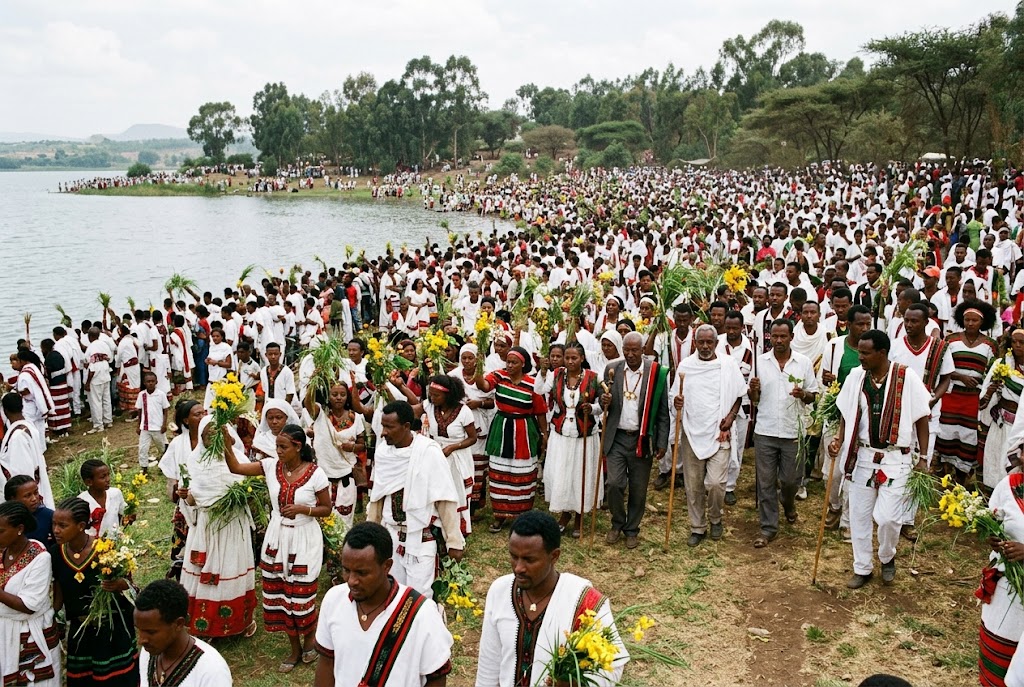
Participants gather at lakeshores and riverbanks to thank Waaqa (God) for peace, health, and a good harvest. They carry fresh green grass and Adey Abeba flowers, dip them in the water, and place them along the shore. Traditional leaders guide prayers and blessings.
Where to experience it: Hora Finfinnee in Addis Ababa and Hora Harsadii in Bishoftu host the largest celebrations. Hundreds of thousands attend, wearing traditional Oromo attire.
Islamic Festivals
Ethiopia has a significant Muslim population, particularly in the eastern and southern regions. Islamic holidays are public holidays.
Eid al-Fitr — March 20, 2026
Eid al-Fitr marks the end of Ramadan, the month of fasting. It is celebrated with prayers, feasts, and gift-giving. The date depends on the lunar calendar and may shift by a day.
Eid al-Adha — May 27, 2026
Eid al-Adha commemorates the willingness of Ibrahim to sacrifice his son. It is marked by prayers, animal sacrifice, and sharing meat with the poor.
Mawlid (Prophet’s Birthday) — August 25, 2026
Mawlid celebrates the birth of the Prophet Muhammad. It is observed with prayers, processions, and community gatherings.
Where to experience them: Harar Jugol, the walled Islamic city in eastern Ethiopia, is the most atmospheric place for Islamic festivals. Dire Dawa and Muslim neighborhoods in Addis Ababa also host celebrations.
Practical Tips for Attending Festivals
Attending an Ethiopian festival requires preparation. Here is what to know.
Book accommodation and transport early. Major festivals draw huge crowds. Hotels in Lalibela, Gondar, and Axum fill up months in advance. Domestic flights on Ethiopian Airlines also sell out quickly.
Dress respectfully. At religious festivals, modest clothing is expected. Cover shoulders and knees. White clothing is traditional and blends in well.
Arrive early for processions. Timkat and Meskel processions draw large crowds. Arriving early gives you a better vantage point and a chance to observe the preparations.
Ask before photographing. Many people are happy to be photographed, but always ask first. Do not use flash during religious ceremonies. Some sacred sites prohibit photography entirely.
Be patient with crowds. Ethiopian festivals are crowded and energetic. Movement can be slow. Keep valuables secure and stay aware of your surroundings.
Verify dates before you travel. While the dates above are based on 2026 calendars, some festivals depend on moon sightings or official announcements. Check with local authorities or tour operators before finalizing plans.
Quick Tips
- Learn a few Amharic greetings. “Selam” (hello) and “Ameseginalehu” (thank you) are appreciated during festival interactions.
- Carry small birr notes. You will need cash for tips, transport, and small purchases during festival days.
- Expect crowds and plan transport accordingly. Roads close for processions. Taxis and rideshare services may be unavailable or expensive.
- Book a local guide for religious festivals. A guide can explain rituals, translate prayers, and help you navigate respectfully.
- Check travel advisories before booking. Security conditions in some regions can change. Consult your government’s travel advice before planning.
Frequently Asked Questions
What is the biggest festival in Ethiopia?
Timkat and Meskel are often considered the largest and most visually spectacular. Timkat celebrates Epiphany with processions and water blessings. Meskel features massive bonfires commemorating the True Cross. Both draw hundreds of thousands of participants.
When is Ethiopian New Year in 2026?
Enkutatash, the Ethiopian New Year, falls on September 11, 2026. It marks the end of the rainy season and the start of the Ge’ez calendar year 2019. The date is fixed in the Gregorian calendar, though it shifts to September 12 in Ethiopian leap years.
Can tourists attend Ethiopian festivals?
Yes. Most festivals are open to visitors. However, respect local customs. Dress modestly, ask before photographing people, and follow the guidance of local organizers. For religious festivals, observe quietly and avoid disrupting ceremonies.
About The Author