5 Reasons Injera Is the True Star of the Ethiopian Dining Table
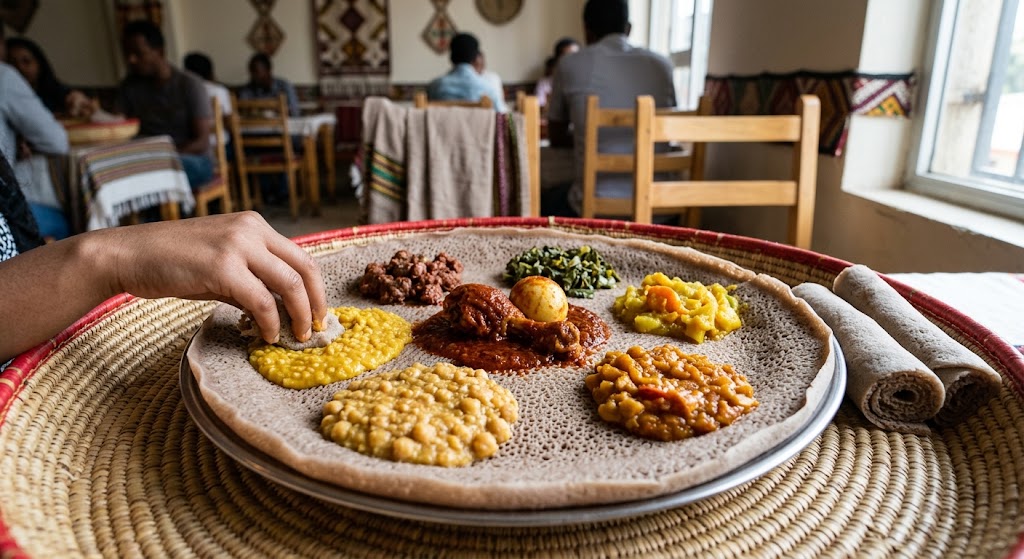
Walk into any Ethiopian restaurant or family home at mealtime, and you will notice something immediately. The table is not set with plates and cutlery in the usual sense. Instead, a large, circular flatbread covers the surface. Stews, vegetables, and salads are arranged on top of it. And alongside each dish, there are extra rolls of the same bread, waiting to be torn and used as utensils.
That bread is injera. It is not a side dish. It is not a garnish. In many ways, it is the meal itself.
Injera is a sourdough flatbread made primarily from teff, a tiny grain native to the Ethiopian highlands. It has a distinctive spongy texture, a slightly sour taste, and a soft, pliable surface covered with tiny holes called “eyes.” For millions of Ethiopians and Eritreans, injera is not just food. It is the foundation of daily dining.
Here are five reasons why injera deserves its place as the true star of the Ethiopian table.
It Is the Plate, the Utensil, and the Meal All at Once
Most cuisines separate the food from the tools used to eat it. A plate holds the meal. A fork delivers it. In Ethiopian dining, injera does both jobs at once.
A large injera serves as the base layer of the meal. Stews called wot (or wat) are spooned directly onto its surface. Salads, lentils, and cooked vegetables are arranged around the edges. The injera underneath absorbs the juices and flavors of everything placed on top of it.
Then comes the clever part. Diners tear off pieces of injera from the edges or from separate rolls placed nearby. They use these pieces to scoop up bites of stew, much like using a soft, edible spoon. The injera becomes the delivery system. By the end of the meal, the base injera has soaked up all the sauces and has become the most flavorful part of the experience.
This approach means no dishes, no cutlery, and no waste. Everything on the table is meant to be eaten.
The Fermentation Process Creates a One-of-a-Kind Texture
Injera gets its distinctive character from a process that takes days to complete. Teff flour is mixed with water to form a batter. A starter culture, saved from a previous batch, is added. The mixture is left to ferment at room temperature for two to five days.
During fermentation, naturally occurring yeasts and bacteria work on the batter. The pH drops, creating the slightly sour taste that injera is known for. Carbon dioxide bubbles form, giving the batter a light, airy quality.
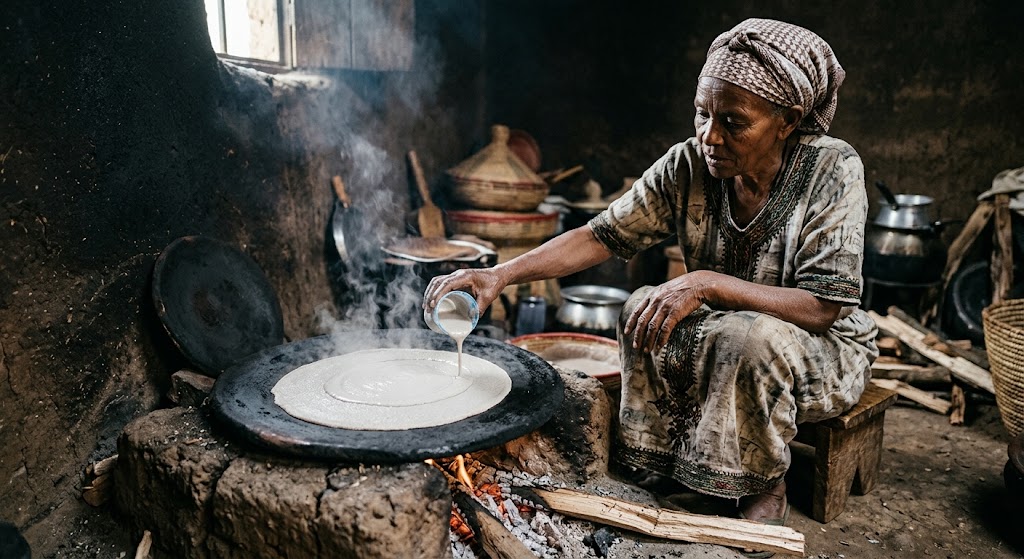
When the batter is ready, it is poured in a circular motion onto a hot clay griddle called a mogogo (in Tigrinya) or mitad (in Amharic). The batter spreads across the surface and is covered tightly. It bakes on one side only, for about two to three minutes. The result is a flatbread with hundreds of tiny holes across its surface and a soft, spongy texture that no other bread can match.
This fermentation process is what makes injera not just bread, but a living food. The sourdough culture is often passed down through generations, with families keeping their starter alive for years.
Teff Makes Injera a Nutritional Powerhouse
The primary grain used for injera is teff, a crop that was domesticated in the Ethiopian highlands thousands of years ago. Teff is tiny smaller than a grain of mustard seed but it packs significant nutritional value.
Teff is naturally gluten-free. This makes injera a safe and satisfying option for people with celiac disease or gluten sensitivity. It is rich in iron, calcium, and dietary fiber. It also contains all eight essential amino acids, making it a complete protein source.
The grain is resilient as well. Teff grows well in dry conditions and resists many pests and diseases, which is why it has remained a staple crop in Ethiopia for millennia.
In recent years, teff has gained international attention as a “superfood.” But in Ethiopia, it has never been a trend. It has simply been the grain that makes the food people eat every day.
It is worth noting that injera can also be made from other grains, including barley, sorghum, and wheat. Barley injera, in particular, has been studied as a more affordable alternative when teff prices rise. But teff injera remains the most preferred and is considered the standard by which others are judged.
Every Meal Becomes a Shared Experience
Ethiopian dining is inherently communal. A single large injera is placed in the center of the table or on a shared platter. Everyone eats from the same surface. Hands reach in, tear off pieces of injera, and scoop up bites from the shared dishes.
This is not just a practical arrangement. It reflects deeper cultural values of sharing, hospitality, and togetherness. Meals are a time to connect, to talk, and to enjoy food as a group rather than as individuals.
The Ethiopian Orthodox Church prescribes fasting on many days throughout the year. During these fasts, injera becomes even more central. Since it is plant-based, it fits naturally into the fasting diet. The injera serves as the base for lentil stews, chickpea purees, and vegetable dishes that make up the fasting meal.
The custom of eating from a shared platter is called gursha when one person wraps a bite of food in injera and offers it to another. It is an act of affection and respect, often shared between family members and close friends. Receiving a gursha is a sign of warmth and acceptance.
Injera Tells the Story of Ethiopian History
The history of injera is intertwined with the history of Ethiopia itself. Teff cultivation dates back to at least the first millennium BC in the Ethiopian highlands. Clay griddles similar to those used today have been found in archaeological sites dating to the Aksumite period.
When Emperor Menelik II expanded the Ethiopian empire in the late nineteenth century, the culture of eating injera spread with it. The Amhara and Tigrayan nobles who dominated the imperial court introduced their food customs to other regions. Eating injera became part of the shared national culture.
Today, injera is eaten across Ethiopia, from the highlands to the lowlands, by people of all ethnic groups. It has become a national food in the truest sense a dish that transcends regional and ethnic boundaries.
The preparation of injera is still primarily done at home by women. It is a time-consuming process that requires planning, patience, and skill. The ability to make good injera is a point of pride. A family’s injera its texture, its sourness, its size is a mark of identity and care.
Quick Tips
- Try injera with different stews. The bread’s sour flavor complements spicy wot, mild lentil dishes, and fresh vegetable salads differently. Experiment to find your favorite combination.
- Eat with your right hand. In Ethiopian tradition, the right hand is used for eating. Tear off a piece of injera, use it to scoop up the stew, and eat in one bite.
- Look for the “eyes.” Good injera has a network of tiny holes across its surface. These indicate proper fermentation and a light, spongy texture.
- Ask about the grain. Some restaurants offer injera made from teff, barley, or a blend. Teff injera is the traditional choice, but barley versions can be equally delicious.
- Try gursha. If you are dining with Ethiopian friends, they may offer you a bite wrapped in injera. Accepting it is a sign of respect and friendship.
Frequently Asked Questions
What is injera made from?
Injera is traditionally made from teff, a tiny gluten-free grain native to Ethiopia. It can also be made from barley, sorghum, or wheat. The flour is mixed with water and fermented for several days before being baked on a clay griddle.
Is injera gluten-free?
Yes, injera made purely from teff is naturally gluten-free. This makes it suitable for people with celiac disease or gluten intolerance. However, some restaurants may blend teff with wheat flour, so check with the kitchen if you have dietary restrictions.
How is injera eaten?
Injera is eaten with the hands. Diners tear off a piece of the bread and use it to scoop up stews, vegetables, or salads from a shared platter. The bread serves as both the plate and the utensil, making it an essential part of the meal.
Other Posts from EthioBrief
- Ethiopian Coffee Ceremony: A Complete Guide — The ritual that often follows an injera meal.
- Ethiopian Orthodox Fasting Food: What to Eat and When — How injera fits into the fasting calendar.
- A Guide to Ethiopian Stews: Doro Wat, Shiro, and More — The dishes that sit on top of injera.
- Teff: Ethiopia’s Ancient Superfood — A deeper look at the grain behind injera.
- Ethiopian Food Etiquette: What to Know Before You Eat — Gursha, hand-washing, and table customs.
About The Author

![20231124_032544[1]](https://ethiobrief.com/wp-content/uploads/2023/11/20231124_0325441-300x202.jpg)
![20231124_024902[1]](https://ethiobrief.com/wp-content/uploads/2023/11/20231124_0249021-300x202.jpg)