Irreecha Festival: A Symbol of Peace, Unity, and Thanksgiving
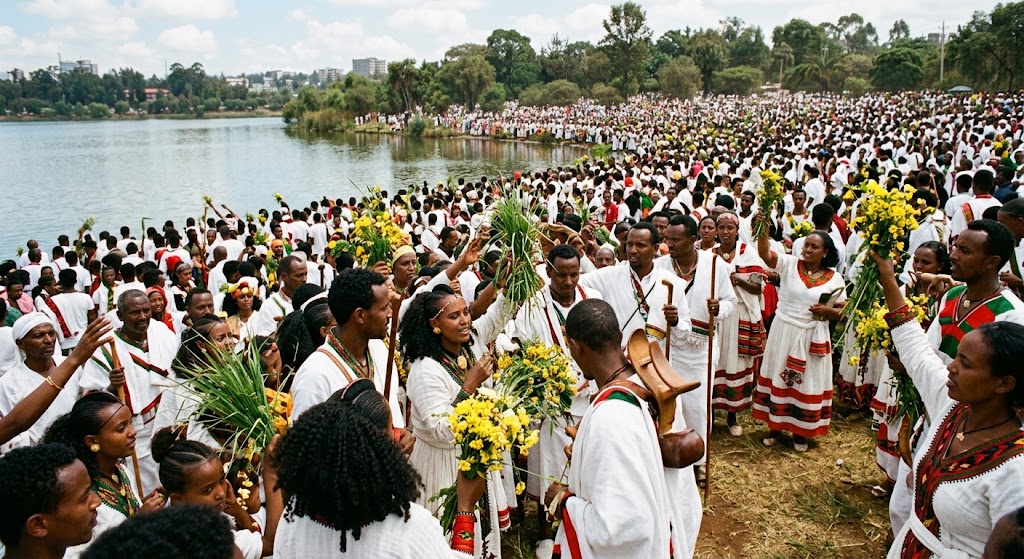
Every October, as the heavy rains of the Ethiopian highlands give way to clear skies, millions of people gather at lakeshores and riverbanks across Oromia. They come dressed in white and bright colors, carrying fresh green grass and yellow daisy-like flowers called Adey Abeba. This is Irreecha, the Oromo thanksgiving festival.
Irreecha marks the end of the rainy season (Ganna) and the arrival of spring (Birraa). It is a time to thank Waaqa (God) for peace, health, a good harvest, and the well-being of families and livestock . But it is more than a harvest ritual. It is a celebration of identity, a call for reconciliation, and a public expression of the values that hold Oromo society together.
The festival has grown into one of Ethiopia’s largest cultural gatherings. In 2026, hundreds of thousands gathered at Hora Finfinnee in Addis Ababa and Hora Harsadii in Bishoftu on October 3 and 4. Government officials, traditional leaders, and ordinary citizens all participate.
This guide explains what Irreecha is, how it is celebrated, and what visitors should know before attending.
What Irreecha Means in Oromo Culture
Irreecha is deeply rooted in Oromo spiritual and cultural tradition. The name itself refers to the act of gathering to offer prayers and thanks to the Creator. It is celebrated twice a year in some traditions: Irreecha Birraa in spring (the main celebration in October) and Irreecha Bonaa at the end of the dry season.
The festival is closely tied to the Gadaa system, the traditional Oromo system of governance and social organization. Gadaa regulates political, economic, social, and religious life. It manages conflict resolution, protects women’s rights, and enforces moral conduct. In 2016, UNESCO inscribed the Gadaa system on its Representative List of the Intangible Cultural Heritage of Humanity.
Because Irreecha is an integral part of Gadaa, its UNESCO recognition also applies to the festival. The Oromia Tourism Bureau and cultural officials have continued efforts to register Irreecha separately as its own UNESCO intangible heritage item.
The core message of Irreecha is simple: gratitude. But that gratitude extends beyond material blessings. It includes thankfulness for peace, for community, and for the chance to begin a new season with a clean heart.
The Spiritual Meaning: Water, Grass, and Waaqa
Water is central to Irreecha. In Oromo belief, water is the source of purity and the foundation of creation and life. The traditional prayer is offered to the “Creator God, the God of Creations, the God of Burqaa Wallaabu”.
Participants carry fresh green grass and flowers to the water’s edge. There, they dip the grass into the lake or river, sprinkle water over themselves and others, and place the grass and flowers along the shoreline. These are not decorations. They are offerings, representing the living landscape and the gratitude expressed through the ceremony.
The grass and flowers also symbolize fertility, renewal, and hope for the coming season. The Adey Abeba flower, in particular, is associated with the Ethiopian spring and the end of the rains.
Traditional leaders guide the ceremony. Abbaa Gadaas (Gadaa leaders) and Haadha Siinqees (women leaders) play specific roles. Their prayers and blessings provide continuity with the practices of earlier generations.
Where Irreecha Is Celebrated
Irreecha takes place at two main types of sites:
- Irreecha Malkaa is observed at riversides and lakeshores.
- Irreecha Tullu is associated with hills and mountain tops.
The two largest celebrations are:
Hora Finfinnee (Addis Ababa): Held in the heart of the capital, this celebration draws hundreds of thousands of people from across the country. It is a major urban event that transforms the lakeshore into a gathering place for Oromo culture.
Hora Harsadii (Bishoftu): Located in the town of Bishoftu, about an hour’s drive from Addis Ababa, this is often considered the main Irreecha celebration. The lake and surrounding areas host massive crowds.
Irreecha is also celebrated in towns and villages across Oromia and by Oromo communities around the world.
How Irreecha Is Celebrated: Rituals and Traditions
The celebration follows a rhythm that has been repeated for generations. Understanding that rhythm helps visitors appreciate what they are seeing.
Morning: Processions to the Water
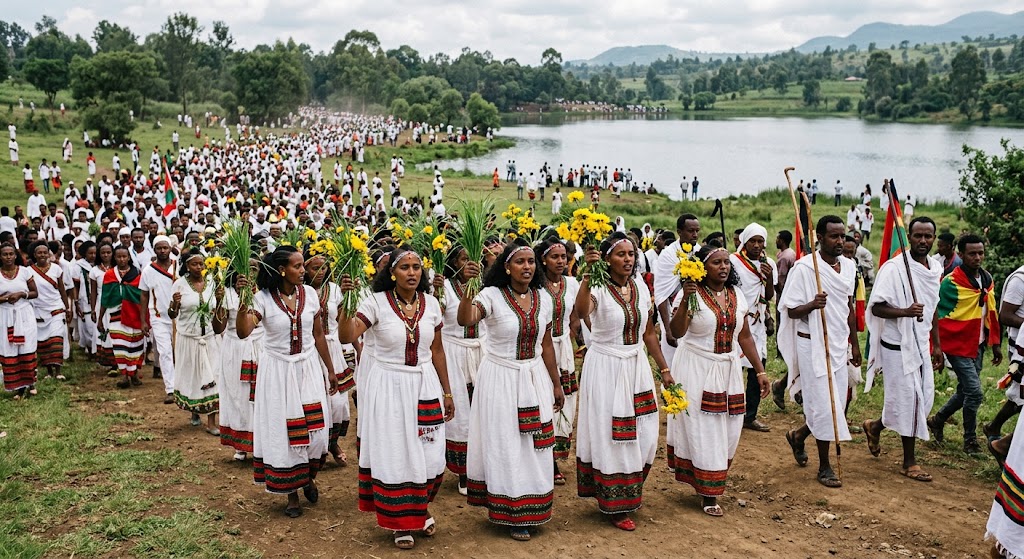
Before sunrise on the main celebration day, processions begin moving toward the water. Participants wear white garments or richly decorated traditional attire. Women adorn themselves with Caaccuu, traditional beads and ornaments, and carry Siinqee, a culturally significant stick associated with women’s identity and social role.
As people walk, they sing. The familiar call of “Maariyoo, Maareyoo” rises from the crowd, a devotional expression that connects the present gathering with generations of observance.
At the Water’s Edge: The Central Rite
At the lake or river, traditional and spiritual leaders guide the ceremony. Prayers, songs of praise, and expressions of thanksgiving accompany the ritual. Participants place their grass and flowers in the water in accordance with customary practices.
The physical act is simple, but the meaning is deep. It gives physical expression to gratitude for the blessings of the Creator and the gifts of nature.
Songs, Chants, and the Soundscape
Sound is essential to Irreecha. Call-and-response chants, vocal blessings, and prayers recited in unison, known as Mareeoo, carry across the open water. Thousands of voices rise and fall together. The rhythm emerges from the cadence of spoken blessings, chants, and the movement of people along the paths.
This oral tradition is part of the broader knowledge preserved within the Gadaa system. Elders and oral historians transmit history, law, rituals, and rules of conduct through spoken recitation, passing knowledge to younger generations.
The Role of Women and Elders
Women play a visible and important role in Irreecha. They participate in processions, lead songs, and carry the Siinqee. Their presence is not incidental. It is part of the cultural expression through which the tradition is sustained.
Elders and traditional leaders preserve the knowledge that gives the ceremony its meaning. They guide the rituals, explain customary practices, and encourage younger people to carry these traditions forward.
Irreecha as a Symbol of Peace and Reconciliation
Gratitude is at the heart of Irreecha, but peace and reconciliation are among its most important social values.
The celebration offers an occasion for people to renew relationships, forgive past grievances, and strengthen bonds with relatives, neighbors, and the wider community. In Oromo cultural tradition, thanksgiving is closely associated with goodwill, harmony, and the rejection of hatred and revenge.
This message is echoed by public officials. Addis Ababa Mayor Adanech Abiebie described Irreecha as a living expression of thanksgiving, peace, love, and unity. She called on Ethiopians to translate these values into action by working collectively to strengthen peace and national consensus.
Prime Minister Abiy Ahmed, in his Irreecha message, said the festival represents justice, equality, love, and unity, and embodies fraternity and solidarity among the people. He urged Ethiopians to work together to overcome challenges and build a brighter future.
The festival also has a personal dimension. Abbaa Gada Jenbere Tessema explained that people who have been in conflict reconcile during Irreecha. The culture also enables orphaned children to find adopters among benevolent people.
Attending Irreecha: What Visitors Should Know
Irreecha is open to all Ethiopians and to foreign visitors. The atmosphere is welcoming, but there are important customs and practical considerations.
Dress respectfully. Wear modest clothing. Many participants wear traditional Oromo attire, but visitors are not required to do so. White or neutral colors are appropriate.
Bring grass and flowers if you wish to participate. Fresh green grass and Adey Abeba flowers are the traditional offerings. They can be purchased from vendors near the celebration sites.
Follow the guidance of traditional leaders. The ceremony has a structure. Observe how others participate, and follow their lead. Do not disrupt processions or rituals for photographs.
Be prepared for crowds. Hundreds of thousands of people attend the main celebrations. Plan your travel accordingly. Arrive early, and be patient with movement in and out of the site.
Respect the spiritual nature of the event. Irreecha is not a performance. It is a religious and cultural ceremony. Keep noise to a minimum during prayers and blessings. Ask before photographing individuals, especially during sacred moments.
Check current information. Celebration dates, venues, and access arrangements can change. Verify details with local authorities, tour operators, or the Oromia Tourism Bureau before traveling.
Quick Tips
- Learn a few Oromo phrases. “Galatoomi” means thank you. Using it shows respect for the culture you are witnessing.
- Arrive before sunrise for the Bishoftu celebration. The morning processions and the first light on the water are the most atmospheric moments.
- Wear comfortable shoes. You will likely walk long distances from parking areas to the lakeshore.
- Carry water and sun protection. October days can be warm, and shade is limited at the main gathering sites.
- Keep your belongings secure. Large public gatherings attract pickpockets. Use a money belt or a bag you can keep close.
Frequently Asked Questions
When is Irreecha celebrated?
Irreecha Birraa, the main celebration, takes place in early October, marking the end of the rainy season and the start of spring. In 2026, the celebrations were held on October 3 and 4 at Hora Finfinnee in Addis Ababa and Hora Harsadii in Bishoftu. A second observance, Irreecha Bonaa, is held at the end of the dry season.
Is Irreecha a religious or cultural festival?
It is both. Irreecha is a thanksgiving ceremony rooted in Oromo spiritual tradition, offering gratitude to Waaqa (God). It is also a major cultural event that celebrates Oromo identity, language, and traditions. It is part of the Gadaa system, which UNESCO recognizes as intangible cultural heritage.
Can foreign visitors attend Irreecha?
Yes. Irreecha is open to visitors who wish to observe or participate respectfully. Dress modestly, follow the guidance of local organizers, and treat the ceremony as a sacred event rather than a spectacle. Check current travel advice and local arrangements before planning your visit.
Other Posts From EthioBrief
- Gadaa System: The Oromo Way of Governance — A deeper look at the UNESCO-recognized system behind Irreecha.
- Ethiopian Cultural Festivals Calendar — Guide to Timkat, Meskel, Irreecha, and other celebrations.
- Oromo Culture and Traditions — An introduction to language, food, and customs.
- Addis Ababa Events and Festivals — What to see and when.
About The Author