Ethiopia: The Land of 80+ Languages
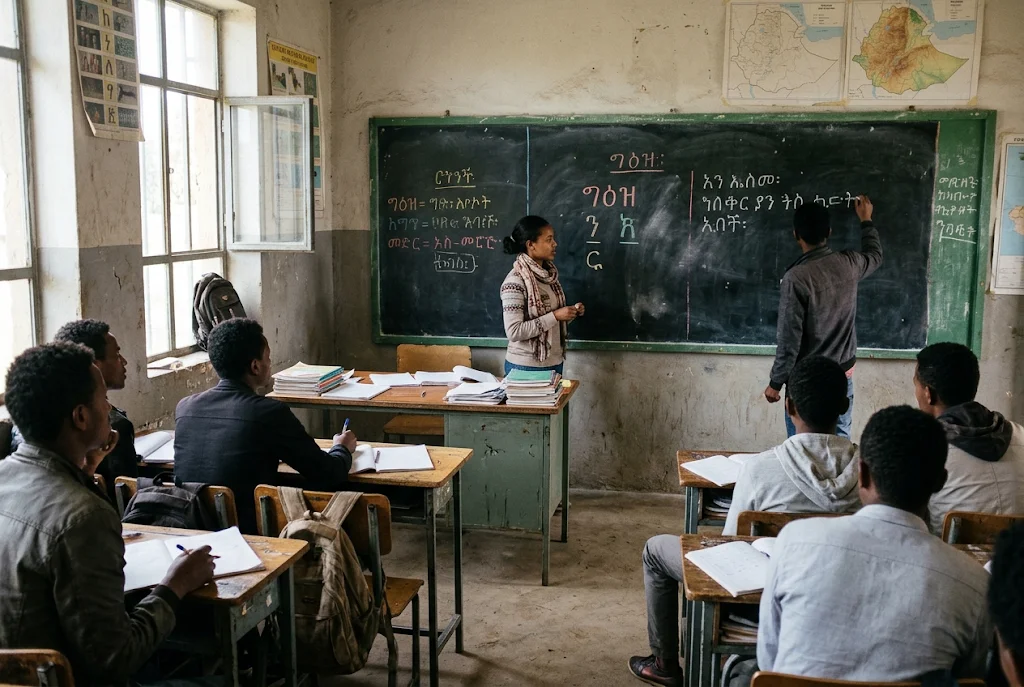
Ethiopia is often described as a mosaic of peoples and cultures. The most direct way to see that diversity is through language. Walk through the streets of Addis Ababa, and you will hear Amharic, Oromo, Tigrinya, and Somali spoken in the same market. Travel to the south, and the sounds change completely. Travel west, and you encounter languages from a different family entirely.
The exact number of Ethiopia languages is debated. The figure “80+” is widely used and appears in academic sources. Ethnologue currently lists 87 living indigenous languages for the country. Other scholarly estimates range from 84 to 109, depending on how languages and dialects are classified. The variation is not a problem. It reflects the reality that counting languages in a country this diverse is genuinely difficult.
This guide explains the major language families, the most widely spoken languages, the writing systems, and what visitors should know about communication in Ethiopia.
The Four Language Families of Ethiopia
Ethiopia’s languages belong to several distinct families. Understanding these families helps explain why the languages sound so different from one another.
Afroasiatic
Most Ethiopian languages belong to the Afroasiatic family. This family is divided into three branches present in Ethiopia:
Semitic: Includes Amharic, Tigrinya, Tigre, and Ge’ez (now liturgical only). These languages are related to Arabic and Hebrew. They are spoken mainly in the central and northern highlands.
Cushitic: Includes Oromo, Somali, Afar, Sidaama, and Hadiyya. These are spoken across the central, southern, and eastern regions.
Omotic: A family found only in Ethiopia, spoken in the southwest. It includes Wolaita, Kafa, and Gamo. The largest Omotic language is Wolaita.
Nilo-Saharan
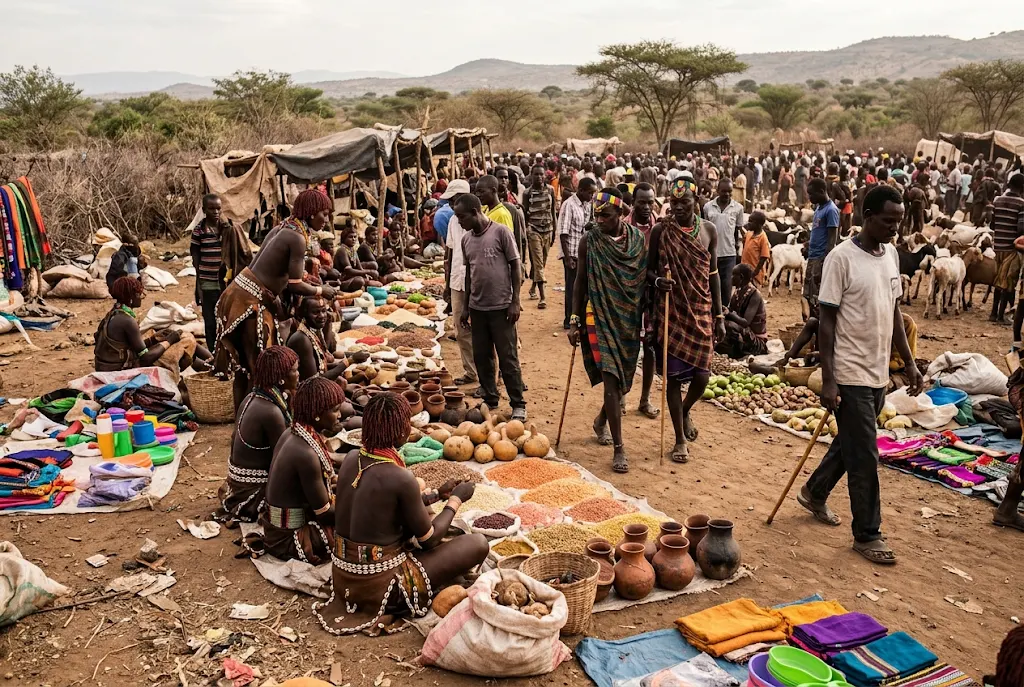
A smaller percentage of the population speaks languages from the Nilo-Saharan family. These include Gumuz, Berta, and Kunama, spoken along the western and southwestern borders with Sudan and South Sudan.
The Most Widely Spoken Languages
While Ethiopia has many languages, a few dominate by number of speakers.
Amharic
Amharic is the working language of the federal government. It has roughly 31.8 million native speakers, with many more using it as a second language . It uses the Ge’ez script. Amharic has been a lingua franca for centuries and remains the most widely used language in cities and government offices.
Oromo
Oromo (Afaan Oromo) is the largest Cushitic language. It has about 40 million speakers, making it the most widely spoken mother tongue in Ethiopia. It uses the Latin script, a change adopted after 1991. Oromo is spoken across Oromia region and by diaspora communities.
Somali
Somali is spoken by about 6.7 million people in Ethiopia’s eastern region. It is also the national language of neighboring Somalia. In Ethiopia, it uses the Latin script.
Tigrinya
Tigrinya has about 6.4 million speakers in Ethiopia’s northern Tigray region. It uses the Ge’ez script and is closely related to Amharic. Tigrinya is also spoken in Eritrea.
Sidaama and Wolaita
Sidaama (4.3 million speakers) and Wolaita (2.4 million) are significant regional languages. Sidaama is Cushitic, while Wolaita is Omotic.
The Ge’ez Script: A Writing System with Ancient Roots
Ethiopia has its own writing system, unlike most African countries that use Latin or Arabic script. The Ge’ez script (also called Ethiopic) is an abugida a system where each character represents a consonant plus a vowel.
The script originated in the ancient Kingdom of Aksum, first appearing around the fifth century BC as an abjad for the Ge’ez language. Ge’ez is now a liturgical language used in the Ethiopian Orthodox Church, but its script was adapted for Amharic and Tigrinya.
Today, Amharic and Tigrinya are written in Ge’ez script. Oromo and Somali use Latin script. This split reflects both practical adaptation and political history. The adoption of Latin for Oromo was a deliberate move away from Amharic dominance after the 1991 federal restructuring.
Language Policy: From Centralization to Federalism
Ethiopia’s language policy has changed dramatically over the past century. Understanding this history explains why language remains a sensitive topic.
Before 1991, Amharic was promoted as the sole official language. Emperors from Tewodros II onward used Amharic as a tool of national unification. This gave Amharic prestige but also created resentment among non-Amharic speakers who saw it as a symbol of domination .
The 1991 federal system changed this. The constitution granted regional states the right to adopt their own working languages. Amharic remained the federal working language, but Oromo, Tigrinya, Somali, and Afar gained official status in their regions .
In 2020, the federal government announced that Afar, Amharic, Oromo, Somali, and Tigrinya would all serve as federal working languages. This was a significant shift toward recognizing the country’s multilingual reality .
What This Means for Travelers
For visitors, Ethiopia’s linguistic diversity is both an asset and a practical consideration.
English is widely used in tourism. Hotels, tour operators, and restaurants in major cities often have English-speaking staff. Ethiopian Airlines and major institutions use English in official communications.
Learning a few words helps. In Amharic, “Selam” (hello) and “Ameseginalehu” (thank you) are useful. In Oromo, “Galatoomi” means thank you. Using local greetings shows respect and often opens conversations.
Not everyone speaks Amharic. Outside major cities, especially in Oromia, Somali region, and the south, local languages dominate. Amharic may not be understood in rural markets or small towns. Having a guide who speaks the local language is valuable.
Signage varies. Government buildings and major roads often use Amharic and English. In Oromia, signs may appear in Oromo (Latin script). In Tigray, Tigrinya (Ge’ez script) is common.
Language is political. The choice of which language to use in a given context can carry meaning. Using the local language where possible is appreciated. Assuming Amharic will work everywhere may be inaccurate or even unwelcome in some regions.
The Challenge of Counting Languages
Why do estimates of Ethiopia’s languages vary so widely?
The last national census was in 2007. A planned 2017 census has not been conducted, partly due to political sensitivities around ethnic and linguistic numbers. Without updated data, estimates rely on academic surveys and Ethnologue’s database.
Different sources also use different definitions. Some count dialects as separate languages. Others group closely related varieties together. The Gurage cluster, for example, contains several mutually unintelligible languages, but the Gurage are often treated as one ethnic group.
In 2025, the House of Federation and Addis Ababa University signed an agreement to create an ethnographic and linguistic atlas. One goal is to accurately determine the number of languages spoken in Ethiopia. Until that work is complete, the “80+” figure remains a reasonable shorthand for a country whose linguistic richness defies easy counting.
Quick Tips
- Learn greetings in the local language. “Selam” works widely, but in Oromia, “Akkam” (hello) is more natural. In Tigray, “Tena yistilign” is a respectful greeting.
- Carry a translation app offline. Google Translate supports Amharic and Oromo. Download the offline language pack before you travel.
- Ask before assuming. In mixed company, asking which language someone prefers is polite. Do not assume Amharic is universal.
- Hire local guides outside major cities. A guide who speaks the regional language will make your trip smoother and more respectful.
- Respect script differences. Oromo uses Latin script, while Amharic and Tigrinya use Ge’ez. Do not assume written materials will be in a script you recognize.
Frequently Asked Questions
How many languages are spoken in Ethiopia?
Estimates range from about 80 to over 100. Ethnologue lists 87 living indigenous languages, while some academic sources cite 84 or 109. The “80+” figure is widely used and accurate as a general description.
What is the official language of Ethiopia?
Amharic is the working language of the federal government. Since 2020, Afar, Oromo, Somali, and Tigrinya also serve as federal working languages. Regional states can designate their own working languages.
What is the Ge’ez script?
The Ge’ez script is Ethiopia’s indigenous writing system. It originated in ancient Aksum and is used today for Amharic and Tigrinya. Ge’ez itself remains the liturgical language of the Ethiopian Orthodox Church.
About The Author